Die WDR-Journalisten Ingolf Gritschneder und Georg Wellmann haben eine knapp einstündige Dokumentation mit dem Titel “Der Kaufhauskönig” über Aufstieg und Geschäftspraktiken des Tiroler Immobilienunternehmers René Benko gedreht. Sie wurde Anfang der Woche in der ARD ausgestrahlt und ist jetzt in der ARD-Mediathek abrufbar.
The success of the “measures” proposed by the government to contain and control the Corona virus depends to a large extent on the willingness of the population to go along with these “measures.” This willingness is contingent on a variety of factors. In this post, I pick out one factor that has a significant influence: the communication behavior of the government, or the communicative relations between the governed and the governed. I would like to briefly introduce two different models and put them up for discussion: that of strategic communication and that of frank speech.
Strategic communication and message control
In political and organizational communication, “strategic communication” is often offered as the means of choice when it comes to implementing “measures” efficiently. This model recommends that organizations and governments communicate strategically to various stakeholders. Messages and news that the organization/government sends out should be clearly structured, formulated uniformly and without contradiction, and sent out with the aid of suitable media.
In terms of communication theory, this idea is based on the classic sender-receiver model developed by the mathematicians Shannon and Weaver in the USA in the 1940s. The aim here was to explore how a message defined by a sender can be transported to a receiver in an efficient manner.
This paper situates organisational transparency in an agonistic space that is shaped by the interplay of ‘mechanisms of power that adhere to a truth’ and critical practices that come from below in a movement of ‘not being governed like that and at that cost’ (Foucault, 2003: 265). This positioning involves an understanding of transparency as a practice that is historically contingent and multiple, and thus negotiable and contested. By illustrating the entanglement of ‘power through transparency’ and ‘counter-transparency’ with reference to the example of Edward Snowden’s whistleblowing, the paper contributes to the critique of transparency and to debates on the use of Foucauldian concepts in post-panoptic contexts of organising. By introducing the notion of ‘counter-transparency’, the paper expands the conceptual vocabulary for understanding the politics and ethics of managing and organising visibility.
In den letzten beiden Wochen gab es einigen Erklärungsbedarf rund um sprunghafte Kursanstiege von zuvor niedrig bewerteten Aktien wie jener der Firma GameStop in den USA. Die Erzählung dahinter war, dass sich Kleinanleger:innen in Online-Foren (z.B. im Reddit-Forum #WallStreetBets) erfolgreich gegen große institutionelle Investoren wie Hedgefonds zusammengeschlossen hätten. Eine schöne Geschichte der Selbstorganisation vieler kleiner Davids, die mit Hilfe neuer Werkzeuge wie Foren und Trading-Apps (die noch dazu Namen wie “Robinhood” haben). Leider ist an dieser Geschichte kaum etwas dran.
Am 15. Januar 2021 feierte mit der Wikipedia ein historischer Glücksfall einer gemeinnützigen, kostenlosen und werbefreien Wissenssammlung 20. Geburtstag. Da ich mich ungefähr seit 2006 wissenschaftlich (z.B. auch in meiner Antrittsvorlesung hier an der Uni Innsbruck) und bloggend mit der freien Online-Enzyklopädie beschäftige, haben mich aus diesem Anlass einige Medienanfragen erreicht. Im folgende eine kurze Zusammenschau.
Die größte Verbreitung haben zwei Zitate in einer DPA-Meldung erfahren, die von SZ-Online und Zeit Online über Bild.de bis DerStandard.at und vielen weiteren Medien übernommen worden ist.
Für die WDR5-Reihe “Scala” hat Claudia Friedrich ein schönes Feature (MP3) gestaltet und mich dafür via Zoom interviewt. Auf ihrem persönlichen Blog hat sie das auch mit Screenshots dokumentiert.
Video des Podcast-Gesprächs mit Markus Beckedahl von netzpolitik.org
Gemeinsam mit Markus Beckedahl haben wir in einem knapp einstündigen Podcast (MP3) nicht nur allgemeine Fragen rund um Wikipedia besprochen, sondern auch auf unsere persönlichen Wikipedia-Erfahrungen zurückgeblickt. Es gibt auch eine Video-Aufzeichnung unseres Gesprächs.
Bei RBBKultur wurde ich in einem Live-Gespräch vor allem zum Thema Gender-Gap, also dem niedrigen Anteil weiblicher Autor:innen in der Wikipedia, befragt.
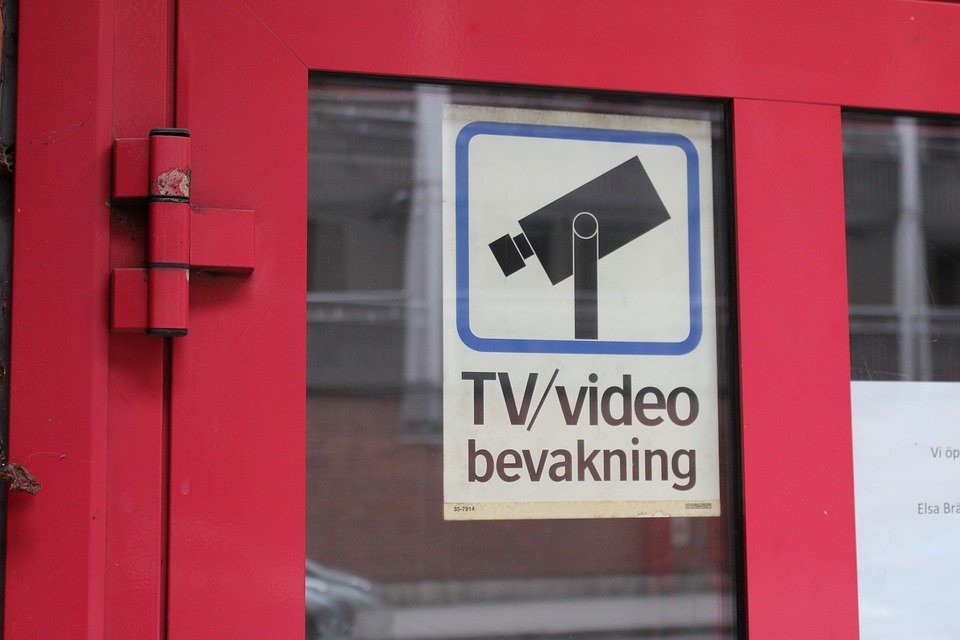
Recently I was invited to contribute to the debate on emerging forms of surveillance society:
Surveillance capitalism technologies are “polyvalent” and can be used for different purposes: they can facilitate an intensification of (state) surveillance, or they can protect privacy and anonymity (for example, facial recognition technology is a surveillance technology, but it can also be used to protect iPhone owners, as the New York Times reported recently in the case of the Hong Kong pro-democracy protests).
On my way home, I often pass a café, which displays an anarchistic saying in its show window: “Even more dangerous than the virus is blind obedience”. There is much about this saying that is correct and important. Much has been written and researched about “blind obedience” and its dangers. “I have only done my duty” – many “obedient” perpetrators have used this justification formula in an attempt to evade responsibility or to justify their own moral failure. But just as dangerous as “blind obedience” is “blind disobedience”. When one thinks of the various so-called “Querdenker” who today protest and defend themselves against the “restrictions” and “coercive measures” of the government in the context of managing the Corona crises, this becomes very clear. One must fear the “blind disobedience” at least as much as the “blind obedience”.
So perhaps the distinction between obedience and disobedience is not the core of the problem, but rather the blindness that is associated with them. Blindness – as a metaphor for the unreflected reaction to some impulse – is the problem.
Alle zwei Jahre werden an der Universität Innsbruck Preise für exzellente Lehre vergeben. Und angesichts von insgesamt 44 hochkarätigen Einreichungen freut es mich ganz besonders, dieses Jahr den Hauptpreis erhalten zu haben – und zwar für den mit Elke Schüßler von der Universität Linz gemeinsam konzipierten Kurs “Organizing in Times of Crisis: The Case of Covid19”. Vielen Dank auch an alle anderen, die zum Gelingen des Kurses beigetragen haben!
For the Organization Studies Students and Alumni Day taking place on Zoom next week, guests for the panel on “Organizing in Digital Times” are confirmed. They are alumni Josefin Brüning, currently HR Change & Transformation Manager at Viega Holding GmbH & Co. KG; Sarah Nobis, currently serving as People and Culture Manager at Swarm Analytics; and Hannah Schupfer, currently a doctoral research fellow at the University of Oslo.
For this fifth addition to ConJunction is something new to our format (aside from being held online). Three masters theses will be presented to inspire future research for current students, as well as generate discussion:
Elena Ruh – Corporate Health Programs between the Ethics of Care and Corporate Colonialization Lukas Nagel – Spaces of responsibility in algorithmic decision-making. An explorative study illustrated by the avalanche risk assessment of Skitourenguru Melissa Köhler – Ambivalences of spaces for ‘other’ organizing: A heterotopology on Virtual Spaces in a Large-Scale Corporation
The event will be hosted via Zoom by Prof. Richard Weiskopf, Prof. Leonhard Dobusch, and Dr. Birthe Soppe. Representing the graduating class is Alina Seebach, with a valedictory speech.
Who: Organization Studies (OS) community What: “Organizing in Digital Times” When: Friday, November 20, 4:00 p.m. – 06:30 p.m. Where: Zoom