New Article in Strategic Organization: »Open Strategy and Traditional Workplace Democracy: Bridging Breadth and Depth of Inclusion«

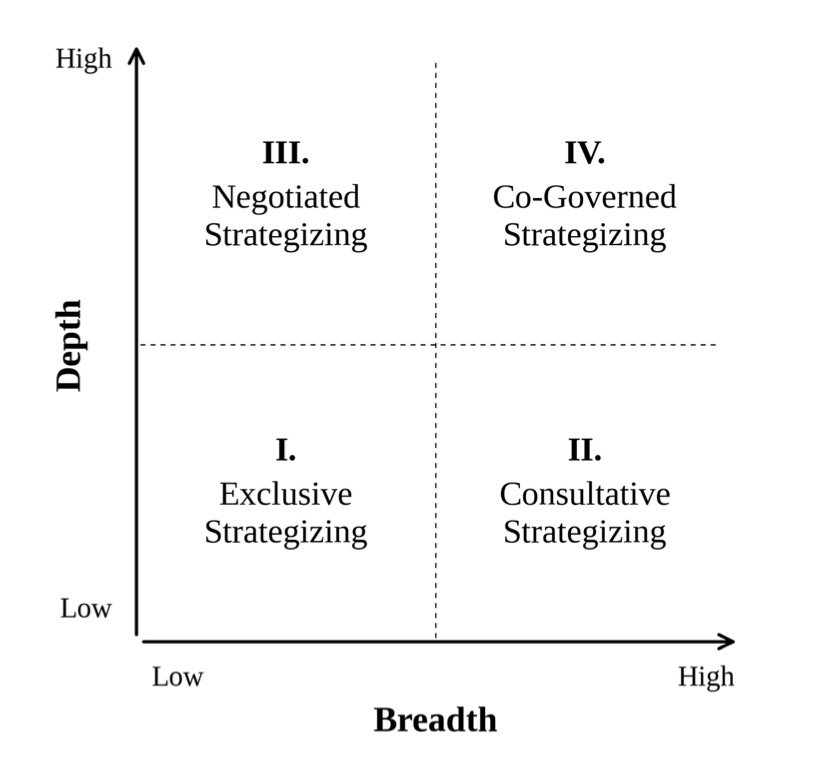
Figure: The breadth-depth matrix of inclusion in strategy-making

The breadth-depth matrix of inclusion in strategy-making (Schmid & Dobusch, 2026)

Looking back, I can hardly remember a research project where the research gap was so glaringly obvious to me: while open strategy research investigates transparent and participatory approaches to strategy-making, over more than a decade of Open Strategy research not a single article addressed its relationship to traditional forms of workplace democracy. This is particularly stunning since increasing transparency and participation in strategy are key tasks of works councils and codetermination regulations in many continental European countries.

Yet, there are several reasons for this omission:

  • There is an inherent top management bias in strategy research as top management is defined as the acting subject in traditional strategy theory
  • Another bias in strategy research is an overwhelming focus on the Anglo-Saxon realm, while traditional workplace democracy as a topic is predominantly pertinent in continental Europe and frequently published in languages other than English
  • In addition, open strategy research reflects that most empirical cases of strategy-making labelled as ‘open’ are mostly management-led and temporary initiatives.

Give this situation, it was by no means certain that the research essay by Felix Schmid and myself on “Open Strategy and Traditional Workplace Democracy: Bridging Breadth and Depth of Inclusion” was to be easily published. Consequently, I am all the more pleased to report that it has just been accepted for publication at Strategic Organization. The abstract reads as follows:

Continue reading “New Article in Strategic Organization: »Open Strategy and Traditional Workplace Democracy: Bridging Breadth and Depth of Inclusion«”
re:publica 2026: Digitale Souveränität und »Ganz normale Medien«

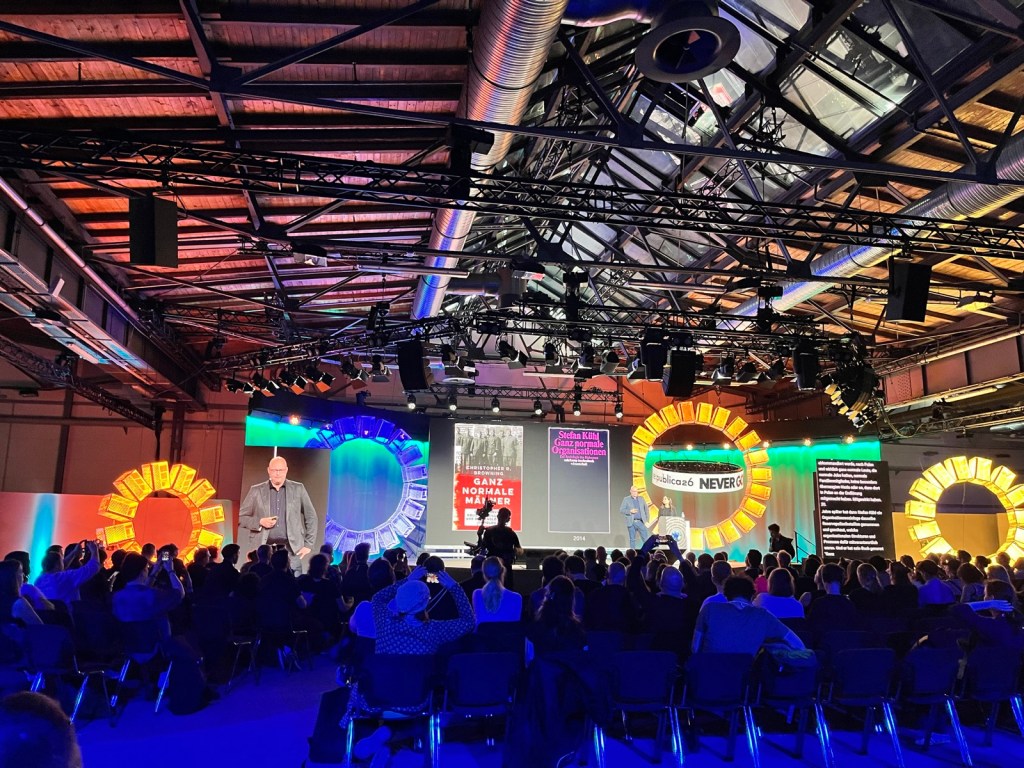
Totale von Stage 1 bei der re:publica 2026

Zum ersten Mal durfte ich dieses Jahr bei der Berliner re:publica, Europas größter Konferenz zur digitalen Gesellschaft, auf Stage 1 vortragen. Gemeinsam mit der Kommunikationswissenschaftlerin Nadia Zaboura habe ich zum Thema “Ganz normale Medien und ihr Beitrag zum Comeback des Faschismus” gesprochen. Aus der Ankündigung des Vortrags:

Das ist keine Übung. Der Vormarsch neofaschistischer Ideen und Parteien ist real. Ermöglicht und mitbefeuert hat diesen Vormarsch ganz normaler Journalismus in ganz normalen Medien – mit vermeintlich neutralem Blick und falscher Objektivität.

Autoritäre und neofaschistische Kräfte profitieren weltweit von einer Doppelstrategie: Einerseits setzen sie seit Jahren auf neue Digitalplattformen, um Menschen direkt zu erreichen – und profitieren dort von deren Algorithmen. Andererseits profitieren sie aber auch von ganz normalem Journalismus in ganz normalen Medien und deren “Algorithmen”: falsche Ausgewogenheit, falsche Gleichsetzung, falsche Dilemmata, Doppelstandards, Mikrofonständerjournalismus und viele weitere Standardsituationen des Medienversagens mehr.

Entscheidend ist dabei, dass diese nicht Ausnahme- sondern Regelfall von normalem, sich als möglichst ‘neutral’ oder ‘objektiv’ verstehendem Journalismus sind. Es ist nicht nur der ‘Boulevard’, es sind nicht nur Axel-Springer- und Newscorp-Medien. Sondern es sind dominante Medienlogiken bis tief hinein in den Qualitätsjournalismus, die sie zu hilflosen Helfern und damit aktiven Ermöglichern neofaschistischer Kommunikationsstrategien und Raumnahme machen.

Die zentrale Ableitung unseres Vortrags: Journalism-as-usual muss enden. Medien ohne klare, antifaschistische Ausrichtung sind Teil des Problems und nicht der Lösung.

Continue reading “re:publica 2026: Digitale Souveränität und »Ganz normale Medien«”