Digital Qualitative Research in a Big Data World

Thoughts on Digital Qualitative Research – Part 2

Part 2 of the series examines the emerging tensions and questions for qualitative research in a Big Data world.

© Bethany Drouin – bsdrouin/pixabay

Boyd and Crawford (2012) define the shift to Big Data as a socio-technical phenomenon. The term Big Data describes the huge amount of data aggregated through interaction online and the ability to cross-reference these large data sets for new insights. Discussing the troubling concept of data, Markham (2018) and Rogers (2013) argue that datafication as ideological focus and the methodological turn towards digital research techniques quantifying social processes pose a temptation as well as a challenge for qualitative research at the same time.

The technological ability to collect data does replace the question if qualitative oriented scholars should collect such large amounts of data (Tiidenberg, 2018), from an ethical as well as from a practical point of view (Markham, 2012). Further, these large data sets do not fully represent social phenomena (Markham, 2018), but Big Data changes the way knowledge is created and research is done by changing the instruments, the focus and the process of research (boyd & Crawford, 2012). Markham (2018, p. 520) sees the turn to the quantification in data analysis, the subsumption of qualitative inquiry as an add-on for data-driven science and the pursuit of generalizability as an “ongoing risk, which the interpretative movement has long sought to combat.”  

Continue reading “Digital Qualitative Research in a Big Data World”

What is digital research?

Thoughts on Digital Qualitative Research – Part 1

In this short series about qualitative digital methods, I want to introduce basic assumptions, challenges and definitions for qualitative research in the digital space. The first part sheds light on the definition of digital research.

© Gerd Altmann – geralt /pixabay

As Hine (2005) and Quinton and Reynolds (2018) state, there is no clear paradigm or restriction for digital research by now. Researchers try to adapt their methodological principles to the digital environment and migrate their ontological and epistemological views into the digital research field.

Continue reading “What is digital research?”

Looking back at the OS ConJunction Students and Alumni Day 2018: “The Value of Organizing and the Organization of Value(s)”


Last Friday, the 3rd OS ConJunction Students and Alumni Day took place at the Haus der Begegnung in Innsbruck. As the title already gives away, this year’s event was all about values.

After a theoretical introduction by Richard Weiskopf, where he gave an overview on “The Value of Values in Organizing”, the panel discussion related theory to organizational praxis.

In a vivid discussion, the panelists Stephan Laske (Transformation Management AG), Tabea Ebel (Lebenshilfe Tirol), Ursula Randolf (BTV) and Konrad Frank (Accenture) shared interesting insights on the role of values in their respective organizations. Continue reading “Looking back at the OS ConJunction Students and Alumni Day 2018: “The Value of Organizing and the Organization of Value(s)””

Call for Papers for a Special Issue in Organization Studies: »Open Organizing in an Open Society?«

Please find below the Call for Papers for a Special Issue in Organization Studies on “Open Organizing in an Open Society? Conditions, Consequences and Contradictions of Openness as an Organizing Principle” (PDF), co-edited by Georg von Krogh, Violetta Splitter, Peter Walgenbach, Richard Whittington and myself. In case you are interested to submit a paper to the Special Issue, please also consider to submit a short paper version of it to the upcoming EGOS sub-theme 55 onOpen Organizing for an Open Society? Connecting Research on Organizational Openness . Submitting authors are not in any way obliged to participate at this sub-theme, and papers presented at the sub-theme are not guaranteed publication in the Special Issue. We just see this sub-theme as an opportunity to develop papers for submission. Deadline for submitting short papers to the EGOS sub-theme is January 14, 2019, deadline for submitting manuscripts to the Special Issue in Organization Studies is November 30, 2019. Continue reading “Call for Papers for a Special Issue in Organization Studies: »Open Organizing in an Open Society?«”

Tagung: »Wahrheit und Postfaktizität«

Am 24.11. veranstalten das FWF-Projekt Language and Violence sowie das Critical Theories Network am Institut für Philosophie der Universität Wien eine eintägige Tagung zum Thema “Wahrheit und Postfaktizität” statt, bei der ich einen Beitrag mit dem Titel “Algorithmische Entscheidungen und spektrogene Prozesse: das Profiling im postfaktischen Zeitalter” beisteuern darf. Hier geht es zum Poster mit dem gesamten Programm der Tagung.

Neuer Buchbeitrag: »Lernen und Lehren im Zeitalter des Remix«

Im Wintersemester 2017/2018 durfte ich einen Vortrag im Rahmen der von Kollegen Theo Hug organisierten Ringvorlesung “Medienpädagogik – Herausforderungen für Lernen und Bildung im Medienzeitalter” beisteuern. Inzwischen ist auf Basis dieser Ringvorlesung ein Sammelband bei innsbruck university press erschienen, inklusive meines Beitrags mit dem Titel “Lernen und Lehren im Zeitalter des Remix”. Der Abstract:

Wir leben im Zeitalter des Remix. Kultur, Bildung und Wissenschaft bauten schon immer auf bereits Bestehendem auf. Internet und digitale Technologien ermöglichen aber die kreative Nutzung existierender Werke in völlig neuen Dimensionen und eröffnen große Potentiale für Medienpädagogik: Nie zuvor war es so vielen möglich, Werke auf so unterschiedliche Arten zu erstellen, zu verändern und anderen zugänglich zu machen. Gleichzeitig floriert Remixkultur zu einem großen Teil in (urheber-)rechtlichen Graubereichen, wenn nicht gar in der Illegalität. Eine Auseinandersetzung mit rechtlichen Rahmenbedingungen, (il-)legitimen Rechtsverletzungen und alternativen Regulierungsformen wie offenen Lizenzen („Creative Commons“) ist deshalb unabdingbar, um die medienpädagogischen Potentiale digitaler Technologien für Lehren und Lernen auszuschöpfen.

Der Buchbeitrag ist als Pre-Print-PDF online verfügbar.

Call for Applications: Doctoral Program »Organizing the Digital«

Recently, the increasing transdisciplinary importance of the digital has become obvious by a growing number of PhD projects, which address their respective questions from various theoretical and methodological perspectives. Across research centers, digitization poses new and relevant research questions and provides new sources of data for addressing them.
The Doctoral Program “Organizing the Digital: Relations, Publics, Societies” promotes transdisciplinary research on digital phenomena that bridges and transcends micro, meso and macro levels of analysis. The Doctoral Program thereby takes a multi-method and inter-disciplinary lens and advances conceptual research, driven by experimental, qualitative and interpretive studies, as well as related quantifications and network analyses.

The Doctoral Program assumes that its doctoral students meet the requirements of the respective curricula of the PhD/doctoral program in which they are enrolled. Additionally, students affiliated to the Doctoral Program #OrganizingtheDigital will attend specific courses focusing on topics of the DP and participate in different types of conferences in order to acquire and deepen presentation and academic discussion skills. Continue reading “Call for Applications: Doctoral Program »Organizing the Digital«”

Rückblick und Ausblick: Die lohnenswerten Zumutungen des Momentum-Kongresses

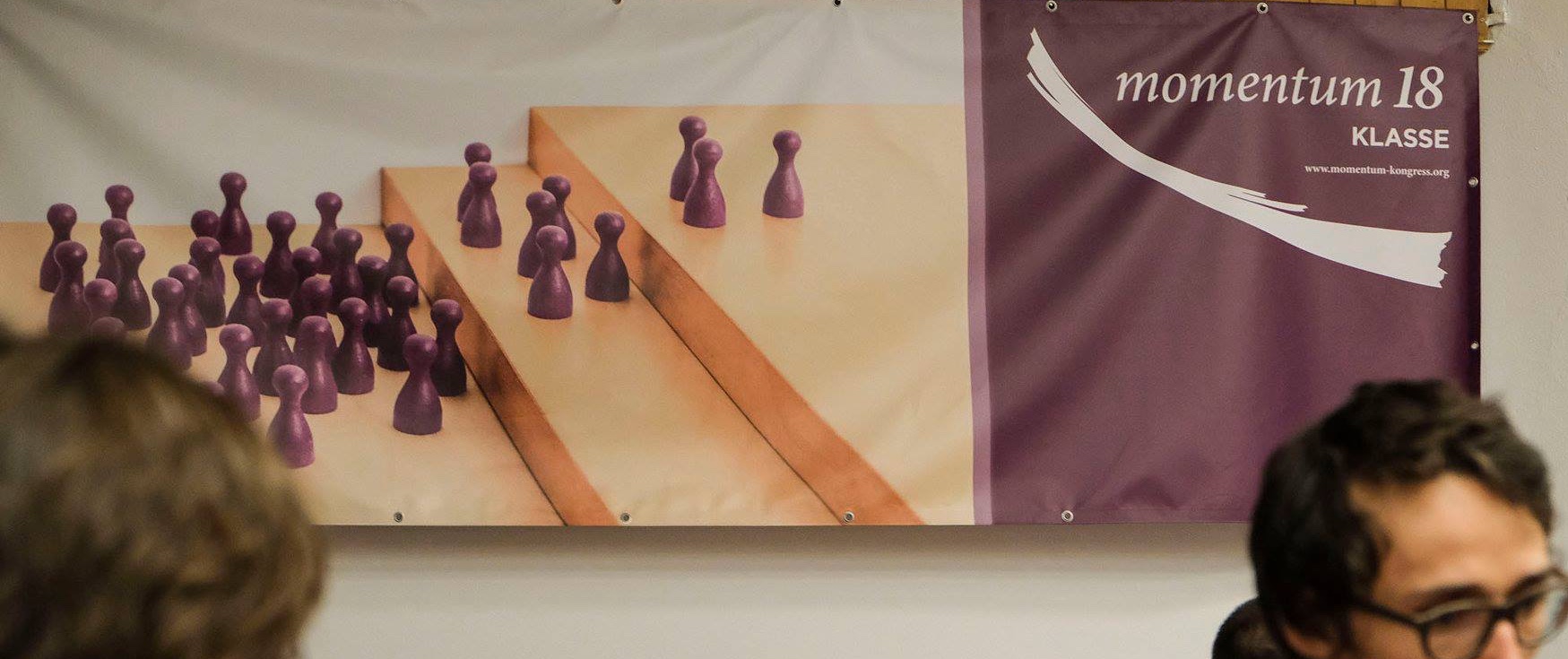
Von 18.-21. Oktober trafen sich in Hallstatt wieder rund 250 Menschen aus Wissenschaft, Politik und Zivilgesellschaft beim alljährlichen Momentum-Kongress um über sozialen Fortschritt zu diskutieren. Die Eröffnung habe ich dabei zum Anlass genommen, mich für die Zumutungen zu entschuldigen, die mit einer Momentum-Teilnahme verbunden sind. Gleichzeitig habe ich aber versucht zu erklären, warum es genau diese Zumutungen sind, die Momentum so lohnenswert machen. Der Call für Momentum 2019 mit dem Generalthema “Widerspruch” von 10.-13. Oktober ist bereits online verfügbar. Im folgenden die Notizen zu meinen Eröffnungsworten beim diesjährigen Kongress: Continue reading “Rückblick und Ausblick: Die lohnenswerten Zumutungen des Momentum-Kongresses”

Neue Veröffentlichung: »Organisationen als Straftäter: Zwischen Emergenz und Evidenz«

Nachdem Richard Weiskopf den ersten Beitrag zur neuen Working-Paper-Reihe der Forschungsplattform “Organizations & Society”  beisteuern durfte, freue ich mich, dass seit kurzem auch mein erstes Working Paper in der Reihe erschienen ist. Der Beitrag mit dem Titel  “Organisationen als Straftäter: Zwischen Emergenz und Evidenz” ist das leicht überarbeitete Manuskript eines Plenumsvortrags, den ich im Rahmen des 42. Workshops der Wissenschaftlichen Kommission Organisation im Verband der Hochschullehrer für Betriebswirtschaftslehre am 15.2.2018 an der Universität
Hamburg gehalten habe.  Der Abstract des Beitrags:

Die vor allem in der Rechtswissenschaft diskutierte Frage nach der eigenständigen Strafbarkeit von Unternehmen berührt auch grundlegende organisationstheoretische Themen wie jene nach organisationalem Fehlverhalten im Speziellen sowie der Akteurseigenschaft von Organisationen im Allgemeinen. Die sowohl in der Organisationsforschung als auch in der deutschsprachigen Rechtswissenschaft vorherrschende Perspektive fokussiert individuelles Fehlverhalten in organisationalen Kontexten. Die für ein Unternehmensstrafrecht entscheidende Frage des Fehlverhaltens von Organisationen verlangt demgegenüber ein Konzept organisationaler Akteurseigenschaft. Gerade ein graduelles Verständnis von Organisation als Organisationalität könnte hierbei einen Ansatzpunkt für die Strafbarkeit von überindividuellen, regelmäßigen Formationen sozialen Handelns liefern.

Das Manuskript ist als Volltext-PDF open access in der Organization & Society Working Paper Series verfügbar unter: http://diglib.uibk.ac.at/ulbtiroloa/download/pdf/2860997

EGOS 2019 Call for Short Papers: »Open Organizing for an Open Society?«

Logo of the 35th EGOS Colloquium in Edinburgh, UK

The 35th EGOS Colloquium will take place from July 4–6, 2019 in Edinburgh, UK, and for the third time after 2015 in Athens and 2017 in Copenhagen Georg von Krogh (ETH Zürich), Richard Whittington (Oxford University) and I will convene a sub-theme on organizational openness. Please find the Call for Short Papers (about 3.000 words) of sub-theme 55 on “Open Organizing for an Open Society? Connecting Research on Organizational Openness” below, submission deadline is January 14, 2019:

Discussions around open organizing date back to the 1950s, when organizations were conceptualized as open systems interdependent with their environments (e.g. Boulding, 1956). However, recent developments have seen openness recast as an organizing principle in a wide range of domains. Indeed, Tkacz (2012, p. 400) describes contemporary advanced societies as undergoing a “second coming of openness”. Thus we see the apparent rise of phenomena such as open innovation (Chesbrough, 2006), open strategy (Hautz et al., 2017), open software development (von Hippel & von Krogh, 2006), open government (Janssen et al., 2012), open science (Nosek et al., 2015), and open education (Seely et al., 2008).

While there is growing reference to notions of openness across domains, these are largely disconnected from each other, show few signs of convergence and lack theoretical reference between domains. This fragmentation is even more marked when considering related notions such as organizational fluidity (Dobusch & Schoenborn, 2015), liquidity (Kociatkiewicz & Kostera, 2014), boundlessness (Ashkenas et al., 2002) and partiality (Ahrne & Brunsson, 2011). Alongside these notions, advanced societies appear also to be seeing the emergence of more open organizational forms such as crowds (Felin et al., 2014), communities (Faraj et al., 2016), ecosystems (Baldwin, 2012) or meta-organizations (Gulati et al., 2012). A central objective of the proposed sub-theme will be to bring together discussions of various forms of open organizing in order to explore possible commonalities and significant distinctions, and to develop means for more connected theorizing across domains and dimensions. Continue reading “EGOS 2019 Call for Short Papers: »Open Organizing for an Open Society?«”