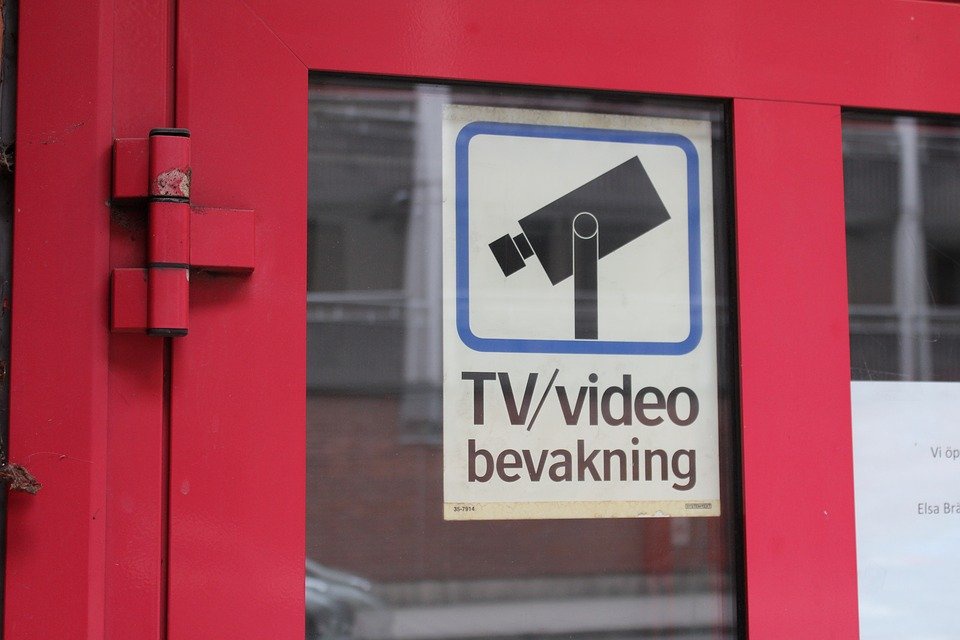
Recently I was invited to contribute to the debate on emerging forms of surveillance society:
Surveillance capitalism technologies are “polyvalent” and can be used for different purposes: they can facilitate an intensification of (state) surveillance, or they can protect privacy and anonymity (for example, facial recognition technology is a surveillance technology, but it can also be used to protect iPhone owners, as the New York Times reported recently in the case of the Hong Kong pro-democracy protests).
On my way home, I often pass a café, which displays an anarchistic saying in its show window: “Even more dangerous than the virus is blind obedience”. There is much about this saying that is correct and important. Much has been written and researched about “blind obedience” and its dangers. “I have only done my duty” – many “obedient” perpetrators have used this justification formula in an attempt to evade responsibility or to justify their own moral failure. But just as dangerous as “blind obedience” is “blind disobedience”. When one thinks of the various so-called “Querdenker” who today protest and defend themselves against the “restrictions” and “coercive measures” of the government in the context of managing the Corona crises, this becomes very clear. One must fear the “blind disobedience” at least as much as the “blind obedience”.
So perhaps the distinction between obedience and disobedience is not the core of the problem, but rather the blindness that is associated with them. Blindness – as a metaphor for the unreflected reaction to some impulse – is the problem.
Alle zwei Jahre werden an der Universität Innsbruck Preise für exzellente Lehre vergeben. Und angesichts von insgesamt 44 hochkarätigen Einreichungen freut es mich ganz besonders, dieses Jahr den Hauptpreis erhalten zu haben – und zwar für den mit Elke Schüßler von der Universität Linz gemeinsam konzipierten Kurs “Organizing in Times of Crisis: The Case of Covid19”. Vielen Dank auch an alle anderen, die zum Gelingen des Kurses beigetragen haben!
For the Organization Studies Students and Alumni Day taking place on Zoom next week, guests for the panel on “Organizing in Digital Times” are confirmed. They are alumni Josefin Brüning, currently HR Change & Transformation Manager at Viega Holding GmbH & Co. KG; Sarah Nobis, currently serving as People and Culture Manager at Swarm Analytics; and Hannah Schupfer, currently a doctoral research fellow at the University of Oslo.
For this fifth addition to ConJunction is something new to our format (aside from being held online). Three masters theses will be presented to inspire future research for current students, as well as generate discussion:
Elena Ruh – Corporate Health Programs between the Ethics of Care and Corporate Colonialization Lukas Nagel – Spaces of responsibility in algorithmic decision-making. An explorative study illustrated by the avalanche risk assessment of Skitourenguru Melissa Köhler – Ambivalences of spaces for ‘other’ organizing: A heterotopology on Virtual Spaces in a Large-Scale Corporation
The event will be hosted via Zoom by Prof. Richard Weiskopf, Prof. Leonhard Dobusch, and Dr. Birthe Soppe. Representing the graduating class is Alina Seebach, with a valedictory speech.
Who: Organization Studies (OS) community What: “Organizing in Digital Times” When: Friday, November 20, 4:00 p.m. – 06:30 p.m. Where: Zoom
Given the excessive power of Google and other large technology firms, transparency and accountability have turned into matters of great concern for organization scholars. So far, most studies adopt either a causal or critical perspective on the relationship between the two concepts. These perspectives are pitted against each other but share some basic assumptions – a fact which limits organization theory’s ability to fully grasp the management of (digital) visibilities. To address these limitations, we therefore propose a third, constructive perspective on these concepts. A constructive perspective turns transparency and accountability from analytic resources into topics of inquiry, allowing organization scholars to study how people in and around organizations put them to work and with what consequences. We introduce sites of ethical contestation as a new methodological strategy to conduct surprising and unintuitive empirical research from a constructive perspective.
This reflection essay is authored by Fabian Lugert and Richard Kempert, students in the master program Organization Studies at University of Innsbruck.
As students of Organization Studies, we often find ourselves in discussions, less often they get as intense as the one we had over the meaning and performativity of the word efficiency. This was challenging for us, because we constantly get confronted with the terms “efficiency”, “efficient” or “inefficient”. Subjectively perceived the word stem is used in every paper we read, which is not surprising as it is widely used and variable in its use. The most general definition of “efficiency” seems to be “doing the things right” (Drucker 1963). Other sources differ in their explanations. For example, the Cambridge Dictionary defines it as “the good use of time and energy in a way that does not waste any” (Cambridge Dictionary “Efficiency”). Another explanation provided by the dictionary: efficiency is “a situation in which a person, company, factory, etc. uses resources such as time, materials, or labor well, without wasting any” or “a situation in which a person, system, or machine works well and quickly” (Cambridge Dictionary “Efficiency”).
Hosted by the the Business & Society Program within the renowned Aspen Institute, the “Ideas Worth Teaching Award” is one of the most prestigious awards for teaching in business and management education. And I am very happy and proud to announce that the collaborative open course “Organizing in Times of Crisis” is among the winners of the 2020 competition – selected out of over 100 nominations.
As recipients of the award, Elke Schüßler (University of Linz) and myself had the honor to introduce our joint course in no longer than 45 seconds:
Over the course of the past decade, we can observe a growing trend towards (calls for) greater openness in various organizational contexts such as open innovation, open government, open strategy or open science. To some degree openness has been recast as a programmatic organizing principle, promising not just gains in efficiency (e.g., Chesbrough & Appleyard, 2007) but also in terms of transparency (Ohlson & Yakis-Douglas, 2019), accountability (Whittington, 2019) and inclusiveness (Mack & Szulanski, 2017). At the same time, we can observe a growing body of literature on diversity and inclusion that addresses openness in terms of inclusive organizing (Ferdman & Deane, 2014; Mor Barak, 2016; Nkomo et al., 2019; Shore et al., 2018; Zanoni et al., 2010).
Particularly regarding inclusiveness, however, we see a detachment of research on openness in various organizational contexts (e.g. strategy or innovation) from other scholarly debates on diversity and inclusion that address inclusive organizing as such (for an exception see Dobusch et al., 2019). With this sub-theme we seek to make a connection between these two separate research streams because we see three particular avenues for crosspollination that will advance our knowledge about inclusion, diversity and open organizing: