Learning from Disasters: A ‘Framing’ Perspective

Was the launch of Siri a “disaster”? Depends on how you frame it. (Foto, CC BY-SA 2.0

This research essay is authored by Melissa Köhler, student in the master program Organization Studies at University of Innsbruck.

‘We do not learn from experiences… we learn from reflecting on experiences.’ (John Dewey)

Unexpected and unusual incidents in organizational life often result in a change from stable conditions into situations that are ‘far from equilibrium’ (Rudolph and Repenning, 2002). Even if undesirable incidents entail an organizational breakdown and misery, organizations can try to make sense of the circumstances. They have the possibility to reflect and learn in order to prevent such occasions, or to improve their response the next time. To understand how organizations learn from disasters, current scientific literature mainly analyzes very popular incidents such as the Mount Everest climbing accident in 1996 or natural catastrophes. In order to gain substantial insights on how organizations learn from disastrous situations, this focus on extreme incidents seems quite narrow-minded. Who defines whether a specific event is a disaster or not? A ‘Framing’ perspective could help to induce a better understanding on how organizations learn from such situations.

Continue reading “Learning from Disasters: A ‘Framing’ Perspective”

Re:publica 2018 im Rückblick: Digital-öffentliche Räume und Güter

Bei der jährlich in Berlin stattfindenden Digitalkonferenz re:publica nahm ich von 2.-4. Mai in einer Doppelrolle als Organisationsforscher mit Interesse an digitalem Wandel und als Mitglied des ZDF Fernsehrats teil. Im folgenden eine kurze Dokumentation meiner Aktivitäten in drei sehr intensiven, wie immer bei der re:publica auch sehr bereichernden Tagen:

Continue reading “Re:publica 2018 im Rückblick: Digital-öffentliche Räume und Güter”

Vortrag und Diskussion im Spielraum Innsbruck: »Open Source und D.I.Y.«

Am Sonntag, 6. Mai 2o18, findet um 18 Uhr im Spielraum Innsbruck (Franz-Fischer-Straße 12) eine Diskussionsveranstaltung in der Reihe “Wie Wir Leben Wollen” zum Thema “Open Source und D.I.Y. – Wege zu einer demokratischen Technisierung” statt. Aus der Ankündigung:

Die Potentiale der rasant fortschreitenden Technisierung sind scheinbar grenzenlos und betreffen nahezu alle Facetten unserer Gesellschaft. Doch so verlockend sie auch sein mögen, so schwierig ist es auch, die damit einhergehenden Gefahren abzuschätzen. So scheint technologische Entwicklung etwa untrennbar mit finanziellen Mitteln verbunden und zahlreiche Beispiele wie Google zeugen von bedrohlich wachsenden Monopolstellungen. Bietet die Open Source Community eine mögliche Antwort auf solche Entwicklungen und kann sie zu einer Demokratisierung in der Technologie beitragen? Kann der D.I.Y. (Do it yourself) Ansatz ein Gegengewicht zu drohender Entfremdung und Abhängigkeit darstellen?

Ich darf die Diskussion mit einem kurzen Impuls zum Thema “Open Source und digitale Offenheit” eröffnen und diese dann gemeinsam mit Rocío Cachada Dibuja (Institut für Medien, Kommunikation und Gesellschaft, Universität Innsbruck) und Ulrich Metschl (Institut für Philosophie, Universität Innsbruck) fortführen.

Die von der Stadt Innsbruck geförderte Veranstaltung wird in Kooperation von Spielraum für Alle, FabLab Innsbruck, Arbeitskreis Wissenschaft und Verantwortlichkeit und FREIRAD organisiert.

Neue Veröffentlichung: »Wie viel ‚Wahrheit’ verträgt die Organisation?«

Seit kurzem erscheint im Rahmen der Forschungsplattform “Organizations & Society” eine transdisziplinäre Working-Paper-Reihe. Es ist mir eine besondere Ehre, dass als erstes Paper in dieser Reihe das Manuskript meiner AntrittsvorlesungWie viel ‚Wahrheit’ verträgt die Organisation? Die Praktik der parrhesia als Herausforderung für moderne Organisation” erschienen ist. Der Abstract lautet wie folgt: Continue reading “Neue Veröffentlichung: »Wie viel ‚Wahrheit’ verträgt die Organisation?«”

Vortrag und Podiumsdiskussion: Transformation und Disruption in der Medienindustrie

In der zweiten Auflage der Vortragsreihe “Herausforderung Digitalisierung” der Fakultät für Betriebswirtschaft ist am 08. Mai 2018 ab 10 Uhr Dr. Clemens Pig zu Gast. In seinem Vortrag wird der Vorsitzende der Geschäftsführung der APA – Austria Presse Agentur die Transformation und Disruption der Medienindustrie beleuchten.

Im Anschluss ans seinen Vortrag zum Thema “Transformation und Disruption in der Medienindustrie: Sharing Economy oder die Renaissance des genossenschaftlichen Innovationsmodells” wird Clemens Pig auf einem Podium mit Ronald Maier, Kathrin Figl und mir diskutieren, es moderiert Dekan Matthias Bank.

Aus organisatorischen Gründen wird um Anmeldung gebeten unter  veranstaltung-bw@uibk.ac.at. 

[Update, 08. Mai 2018:] Ein Bericht von der Veranstaltung ist auf der Webseite der Universität Innsbruck verfügbar. [/Update]

Save the Date for the third Organization Studies ConJunction Students and Alumni Day on Friday, November 23, 2018

conJunction 2018

As every year, this day is an opportunity to connect with current and former fellow students of OS, to share experiences, to gain new and interesting insights into on- and off-campus OS-topics and mainly, to spend a good time together in a relaxed atmosphere.

This Year, we will meet at Haus der Begegnung and the topic will be “Organizing Values and the Value of Organizing”. Further information about the event’s content will follow soon, more information can be found at the Organization Studies Innsbruck Alumni Portal.

We are looking forward to seeing you there!


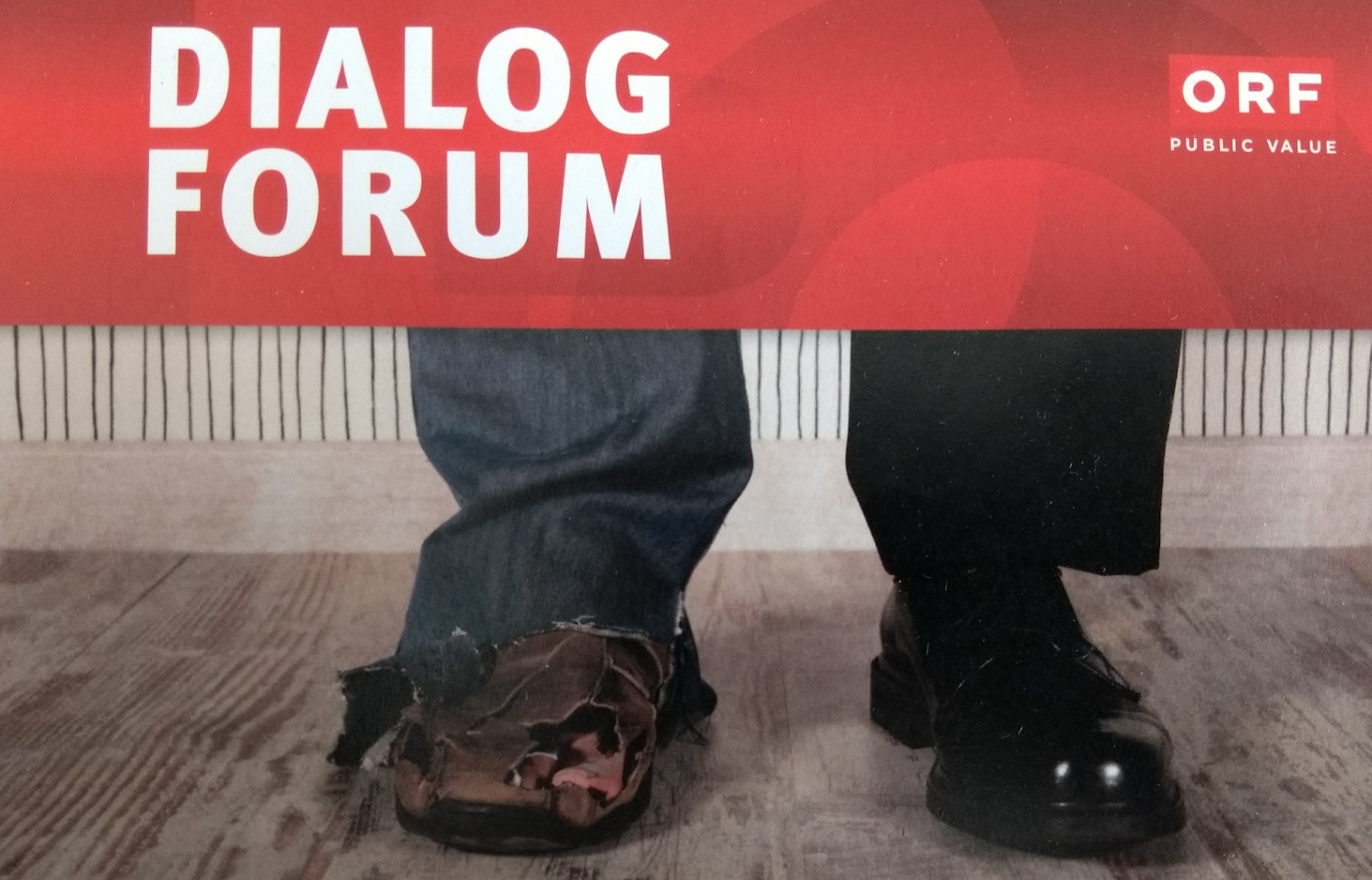
ORF DialogForum »Wem nützt Wirtschaft?«

Ausschnitt aus dem Flyer zur Veranstaltung

Am kommenden Sonntag, 22. April 2018, 13.00 Uhr, findet im ORF Radiokulturhaus, Großer Sendesaal, Argentinierstraße 30a, 1040 Wien, ein ORF DialogForum zum Thema “Wem nützt Wirtschaft” statt, mit folgendem Programm:

Keynote:
Kate Raworth, „Doughnut Economics – Seven ways to think like a 21st Century Economist”

Diskussion:

  • Leonhard Dobusch, Wirtschaftswissenschaftler, Universität Innsbruck
  • Christian Felber, Genossenschaft für Gemeinwohl
  • Monika Köppl-Turyna, Agenda Austria
  • Katharina Schrimpf, Gesellschaft für plurale Ökonomie
  • Werner Wutscher, New Venture Scouting

Moderation:
Klaus Unterberger, ORF-Public-Value-Kompetenzzentrum

Continue reading “ORF DialogForum »Wem nützt Wirtschaft?«”

New Publication: »Organisatorische Komplexität in sozialen Bewegungen: Das Beispiel globaler Dschihadismus«

mq-logo3

In a new paper published by Momentum Quarterly, I look at the modalities of organizing in the global jihadist movement. One reason for the resilience of the movement is the combination of different modes of organizing, such as hierarchical organizations and networks. I argue that some of the difficulties in effectively countering global jihadism result from a misconception of the movement as being either a hierarchy or a network. The “rhizome” metaphor of French philosophers Deleuze and Guattari can help us to better grasp the organizational complexity of the phenomenon, and might help us to think about new ways to deal with global jihadism. The abstract reads as follows:

This article illustrates the “rhizome” metaphor of Gilles Deleuze and Félix Guattari with the example of global jihadism. The aim of the article is twofold: first, it shows the potential of the metaphor to contribute to a better understanding of dynamic modalities of organizing. Second, it contributes to a more comprehensive understanding of global jihadism as an empirical phenomenon. By implementing the rhizome metaphor, it becomes apparent that the organization of global jihadism extends beyond an either/or duality of hierarchy and network, but that it is an organizational multiplicity which comprises both hierarchical and network dimensions at the same time. The extent of those dimensions is constantly changing.

The full open access article (in German) can be found here.


New: Organization Studies Sack Lunch Seminar

Lunch bag (via)

Full schedules and teaching loads often makes it difficult for all members of the organization studies Innsbruck team to find time to discuss ongoing research and recently published articles. This is the reason for us to launch a Sack Lunch Seminar. The idea is to read an article beforehand and discuss it over lunch, with the participants bringing their own lunch bag. The host of each session selects the article to be discussed,

Dates, hosts and rooms of the OS Sack Lunch Seminar 2018 are listed below – the seminar starts at noon: Continue reading “New: Organization Studies Sack Lunch Seminar”