Professor of Organization at University of Innsbruck | Co-founder Momentum Conference and Momentum Institut | ZDF Verwaltungsrat | Blogging at netzpolitik.org
Die WDR-Journalisten Ingolf Gritschneder und Georg Wellmann haben eine knapp einstündige Dokumentation mit dem Titel “Der Kaufhauskönig” über Aufstieg und Geschäftspraktiken des Tiroler Immobilienunternehmers René Benko gedreht. Sie wurde Anfang der Woche in der ARD ausgestrahlt und ist jetzt in der ARD-Mediathek abrufbar.
In den letzten beiden Wochen gab es einigen Erklärungsbedarf rund um sprunghafte Kursanstiege von zuvor niedrig bewerteten Aktien wie jener der Firma GameStop in den USA. Die Erzählung dahinter war, dass sich Kleinanleger:innen in Online-Foren (z.B. im Reddit-Forum #WallStreetBets) erfolgreich gegen große institutionelle Investoren wie Hedgefonds zusammengeschlossen hätten. Eine schöne Geschichte der Selbstorganisation vieler kleiner Davids, die mit Hilfe neuer Werkzeuge wie Foren und Trading-Apps (die noch dazu Namen wie “Robinhood” haben). Leider ist an dieser Geschichte kaum etwas dran.
Am 15. Januar 2021 feierte mit der Wikipedia ein historischer Glücksfall einer gemeinnützigen, kostenlosen und werbefreien Wissenssammlung 20. Geburtstag. Da ich mich ungefähr seit 2006 wissenschaftlich (z.B. auch in meiner Antrittsvorlesung hier an der Uni Innsbruck) und bloggend mit der freien Online-Enzyklopädie beschäftige, haben mich aus diesem Anlass einige Medienanfragen erreicht. Im folgende eine kurze Zusammenschau.
Die größte Verbreitung haben zwei Zitate in einer DPA-Meldung erfahren, die von SZ-Online und Zeit Online über Bild.de bis DerStandard.at und vielen weiteren Medien übernommen worden ist.
Für die WDR5-Reihe “Scala” hat Claudia Friedrich ein schönes Feature (MP3) gestaltet und mich dafür via Zoom interviewt. Auf ihrem persönlichen Blog hat sie das auch mit Screenshots dokumentiert.
Video des Podcast-Gesprächs mit Markus Beckedahl von netzpolitik.org
Gemeinsam mit Markus Beckedahl haben wir in einem knapp einstündigen Podcast (MP3) nicht nur allgemeine Fragen rund um Wikipedia besprochen, sondern auch auf unsere persönlichen Wikipedia-Erfahrungen zurückgeblickt. Es gibt auch eine Video-Aufzeichnung unseres Gesprächs.
Bei RBBKultur wurde ich in einem Live-Gespräch vor allem zum Thema Gender-Gap, also dem niedrigen Anteil weiblicher Autor:innen in der Wikipedia, befragt.
Alle zwei Jahre werden an der Universität Innsbruck Preise für exzellente Lehre vergeben. Und angesichts von insgesamt 44 hochkarätigen Einreichungen freut es mich ganz besonders, dieses Jahr den Hauptpreis erhalten zu haben – und zwar für den mit Elke Schüßler von der Universität Linz gemeinsam konzipierten Kurs “Organizing in Times of Crisis: The Case of Covid19”. Vielen Dank auch an alle anderen, die zum Gelingen des Kurses beigetragen haben!
Given the excessive power of Google and other large technology firms, transparency and accountability have turned into matters of great concern for organization scholars. So far, most studies adopt either a causal or critical perspective on the relationship between the two concepts. These perspectives are pitted against each other but share some basic assumptions – a fact which limits organization theory’s ability to fully grasp the management of (digital) visibilities. To address these limitations, we therefore propose a third, constructive perspective on these concepts. A constructive perspective turns transparency and accountability from analytic resources into topics of inquiry, allowing organization scholars to study how people in and around organizations put them to work and with what consequences. We introduce sites of ethical contestation as a new methodological strategy to conduct surprising and unintuitive empirical research from a constructive perspective.
Hosted by the the Business & Society Program within the renowned Aspen Institute, the “Ideas Worth Teaching Award” is one of the most prestigious awards for teaching in business and management education. And I am very happy and proud to announce that the collaborative open course “Organizing in Times of Crisis” is among the winners of the 2020 competition – selected out of over 100 nominations.
As recipients of the award, Elke Schüßler (University of Linz) and myself had the honor to introduce our joint course in no longer than 45 seconds:
Over the course of the past decade, we can observe a growing trend towards (calls for) greater openness in various organizational contexts such as open innovation, open government, open strategy or open science. To some degree openness has been recast as a programmatic organizing principle, promising not just gains in efficiency (e.g., Chesbrough & Appleyard, 2007) but also in terms of transparency (Ohlson & Yakis-Douglas, 2019), accountability (Whittington, 2019) and inclusiveness (Mack & Szulanski, 2017). At the same time, we can observe a growing body of literature on diversity and inclusion that addresses openness in terms of inclusive organizing (Ferdman & Deane, 2014; Mor Barak, 2016; Nkomo et al., 2019; Shore et al., 2018; Zanoni et al., 2010).
Particularly regarding inclusiveness, however, we see a detachment of research on openness in various organizational contexts (e.g. strategy or innovation) from other scholarly debates on diversity and inclusion that address inclusive organizing as such (for an exception see Dobusch et al., 2019). With this sub-theme we seek to make a connection between these two separate research streams because we see three particular avenues for crosspollination that will advance our knowledge about inclusion, diversity and open organizing:
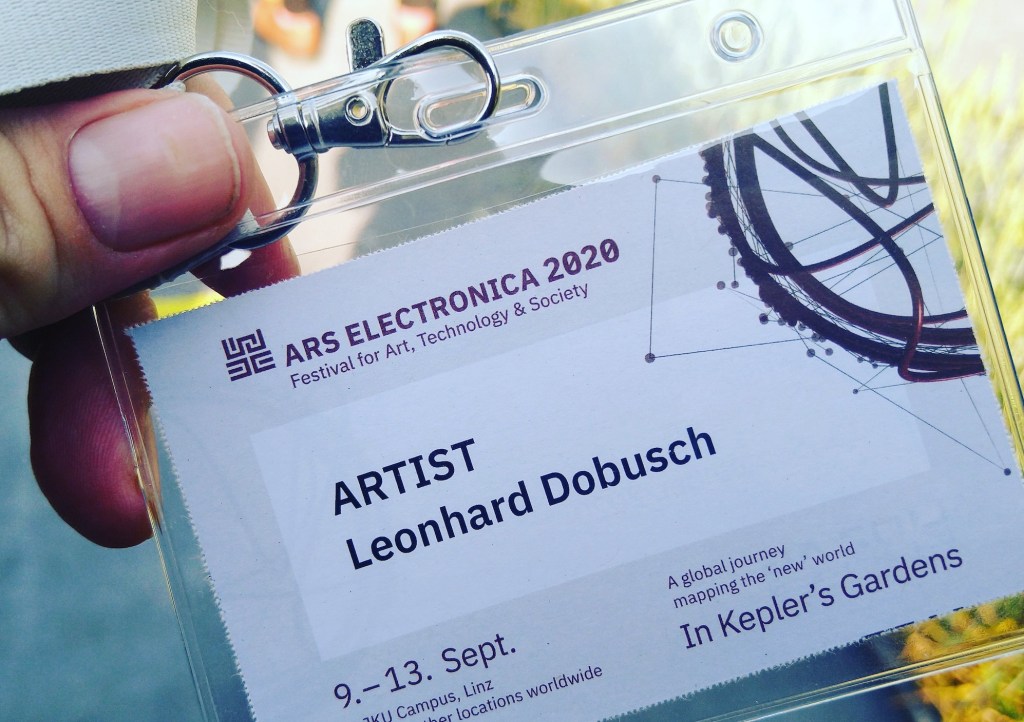
Im Rahmen des diesjährigen Ars Electronica Festivals in Linz war ich auf Einladung von Walter Ötsch Teil eines eintägigen Symposiums zum Thema “COVID-19 Crisis: Wie könnte/kann sich die Gesellschaft ändern?”. In drei Sessions durfte ich dabei neben Ötsch selbst noch mit der Philosophin Antonia Birnbaum, der German-Zero-Aktivistin Evelyn Bodenmeier und dem Soziologen Sighard Neckel unter Moderation von Ö1-Journalistin Renata Schmidtkunz diskutieren. Mein Vortrag widmete sich dem Thema “Neue digitale Öffentlichkeit für neue Formen solidarischer Verantwortlichkeit”, die Slides finden sich wie üblich bei Slideshare:
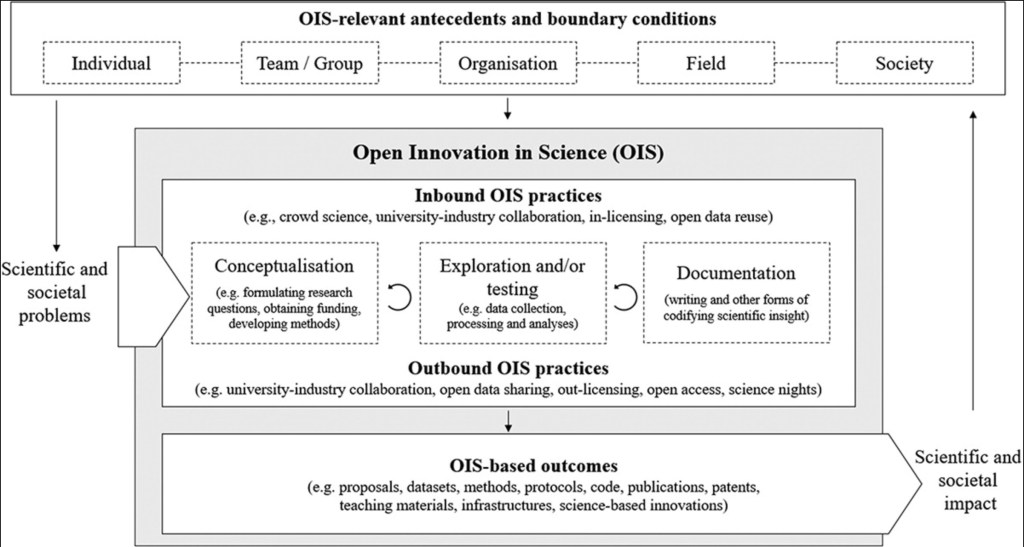
Openness and collaboration in scientific research are attracting increasing attention from scholars and practitioners alike. However, a common understanding of these phenomena is hindered by disciplinary boundaries and disconnected research streams. We link dispersed knowledge on Open Innovation, Open Science, and related concepts such as Responsible Research and Innovation by proposing a unifying Open Innovation in Science (OIS) Research Framework. This framework captures the antecedents, contingencies, and consequences of open and collaborative practices along the entire process of generating and disseminating scientific insights and translating them into innovation. Moreover, it elucidates individual-, team-, organisation-, field-, and society‐level factors shaping OIS practices. To conceptualise the framework, we employed a collaborative approach involving 47 scholars from multiple disciplines, highlighting both tensions and commonalities between existing approaches. The OIS Research Framework thus serves as a basis for future research, informs policy discussions, and provides guidance to scientists and practitioners.





 ConJunction
