Dear all, we are delighted to extend a warm invitation to the ninth Organization Studies ConJunction Day “Organizing in/exclusion” which will take place on November 28, 2025, at 3 p.m.
Continue reading “Save the Date: OS ConJunction 28.11.2025”
Dear all, we are delighted to extend a warm invitation to the ninth Organization Studies ConJunction Day “Organizing in/exclusion” which will take place on November 28, 2025, at 3 p.m.
Continue reading “Save the Date: OS ConJunction 28.11.2025”
Am Dienstag, 20. Mai 2025, bin ich zu Gast im Stadtteiltreff Wilten, Leopoldstraße 33 a, 6020 Innsbruck, zu Vortrag und Diskussion zum Thema “Was ich schon immer wissen wollte über René Benkos Signa-Pleite”. Aus der Ankündigung:
Der Tiroler Immobilien-Unternehmer René Benko hat mit der Insolvenz der Signa-Gruppe die größte Pleite in Österreichs Zweiter Republik hingelegt. Doch auch jetzt, nach der Rekordpleite, liegt der mediale Fokus primär auf der Person René Benko und diversen pikant-privaten Details seines Lebensstils. Umso wichtiger wäre es, in Aufarbeitung den Immobilienfall Signa und nicht nur den mutmaßliche Kriminalfall Benko ins Zentrum zu rücken. Denn vieles von dem, was Signa erst groß und dann kaputt gemacht hat, ist weiterhin üblich.
Eintritt ist frei, schaut vorbei!

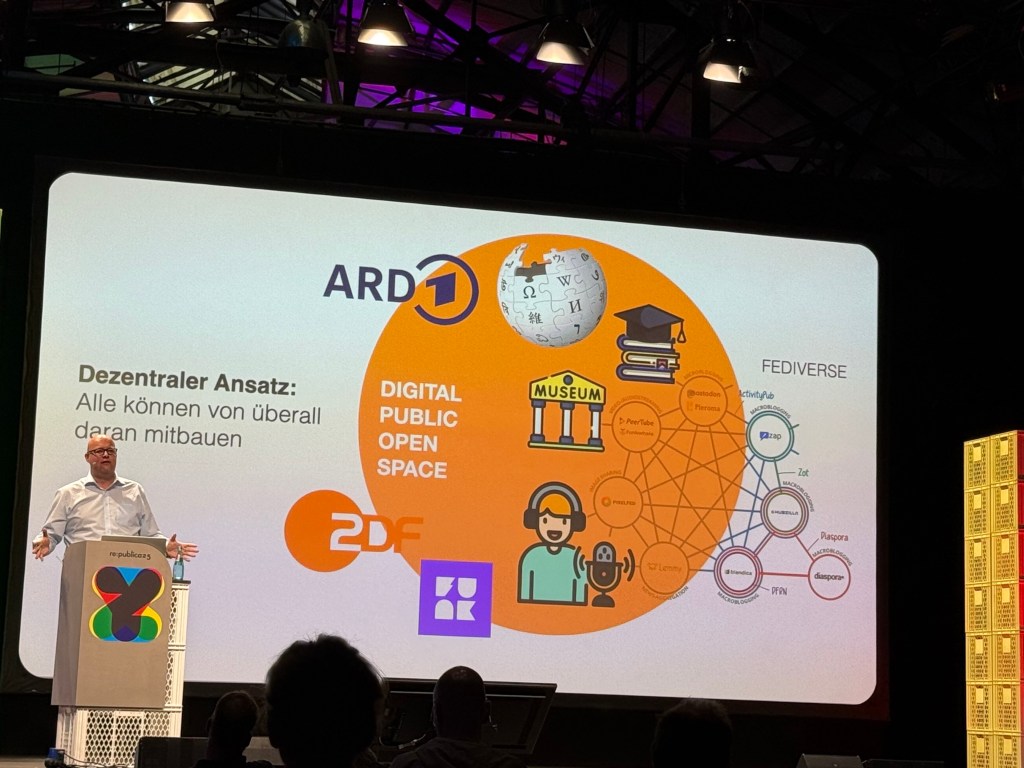
Das Verhältnis zwischen privaten und öffentlich-rechtlichen Medien wird in Deutschland traditionell als ein wettbewerbsorientiertes Nebeneinander und gegenseitiges Ausbalancieren wahrgenommen und geregelt. Der digitale Wandel und die zunehmende Dominanz von Plattformen stellen diese Sichtweise jedoch zunehmend in Frage.
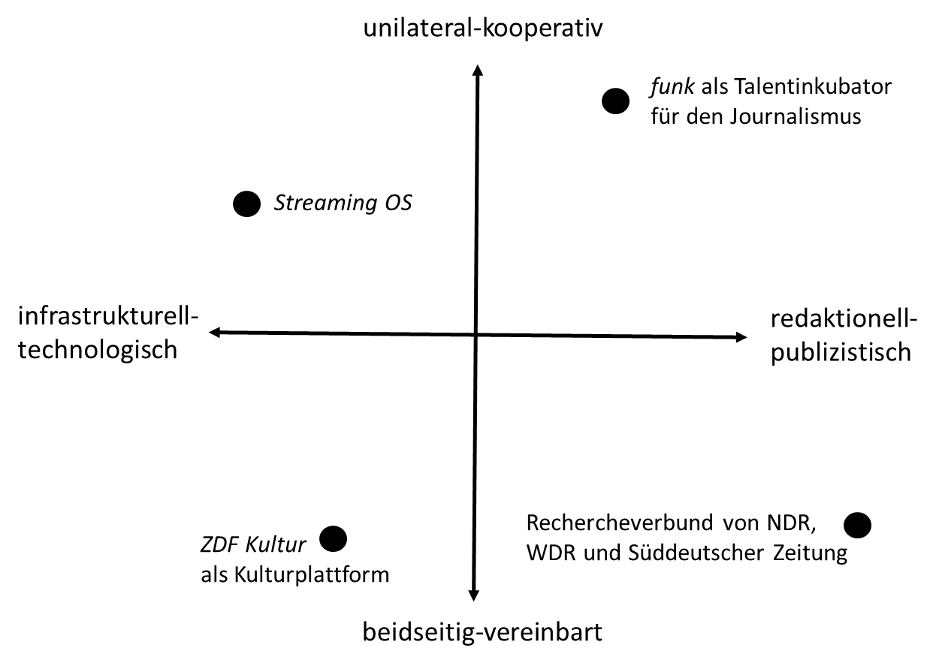
Als Antwort darauf plädieren Christopher Buschow (Hamburg Media School) und ich in einem im Wirtschaftsdienst erschienen Beitrag für einen Coopetition-Ansatz, bei dem Wettbewerb und Zusammenarbeit nebeneinander bestehen, um demokratische Öffentlichkeiten zu stärken.
Continue reading “Neuer Artikel: »Kompetitiv und kooperativ: Zur Neuordnung des Verhältnisses von privaten und öffentlich-rechtlichen Medien im Digitalzeitalter«”
Together with Julia Hautz and Thomas Ortner (both situated at the neighboring department of Strategic Management and Leadership), I had the honor to contribute to the most recent iteration of the Cambridge Handbook of Strategy as Practice with a chapter on “Open Strategy as a New Form of Strategizing”:
[W]e can observe an increasing trend towards more inclusive and transparent strategizing. From a practice perspective, this trend can be described as a shift in the practices of strategy-making. [We] describe the different practices of inclusiveness and transparency and show how they relate to each other. [We] then identify and review distinctive themes of strategy as practice research on Open Strategy. This includes the role of technologies and materiality in enabling openness, the discursive practices and processes underpinning openness, the temporal dynamics of open processes, the difference between controlled and uncontrolled forms of openness and the dialectic relationship between openness and closure.
Check out the article here – and please contact me to receive a personal copy in case your institution does not provide access to the handbook.

About two years ago, Austrian scholars researching Strategizing Activities and Practices (SAP), which is also a transnational Interest Group at the Academy of Management, had met for a first regional meeting in Innsbruck. Today, we convened for a second time at the Open Innovation Center at Johannes Kepler University (JKU) Linz.
Continue reading “The Austrian Strategizing Activities & Practices Community met at Johannes Kepler Uni Linz”Digital platforms, like Instagram, offer various ways for self-expression, support, and community building, but their content moderation practices reveal deep-rooted biases that affect who gets to participate platform organizing. In our recent paper “‘Your Very Existence Goes Against Our Community Guidelines’: Interrogating norms of contributorship through poetic speech acts on Instagram” in Organization Studies, we – Monica Nadegger, Milena Leybold and Sean Kenney – explore how these platforms enforce norms through content moderation, shaping what contributions are deemed appropriate. Find out more in this blog post and in the full paper.


Dear all, we are delighted to extend a warm invitation to the eight Organization Studies ConJunction Day “Organizing (In)transparency” which will take place on November 22, 2024, at 3 p.m.
Continue reading “OS ConJunction 2024”
(from left to right: Urs Dahinden, Matthias Künzler, Ulla Autenrieth, Simon Gadras, Alwin Baumhöver, Johanna Burger, Caroline Dalmus, Malte Meyer)
The international research project “Local Journalism and Municipal Communication in Digital Transformation” brought together researchers from Switzerland, Germany, France, Italy, and Austria to explore the digital transformation of local journalism and municipal communication.
Our team presented the findings at the 10th European Communication Research and Education Association (ECREA) conference in Ljubljana, Slovenia, held from September 24 to 27. This year’s theme, “Communication & Social (Dis)order”, provided a platform for our panel presentation titled “Innovation as a Threat to Democracy? Effects of Local Communication’s Transformation on Democracies”. Here, we discussed the potential risks and opportunities of digital innovation in local communication, particularly the evolving interdependencies between municipalities and local media.
For more information and access to project results, including practical recommendations for local media and municipalities, visit the project’s website where the results are available in German language.

We are hiring:
Please do not hesitate to contact me in advance in case any questions arise.
I – Ellen, Milena, Monica – wrote toget-her, becoming the Collective I. It is not just a paper. It’s love, pain, struggle, courage, connection and togetherness, navigating the challenges of academic writing as early career scholars. It’s an intimate, personal encounter of my vulnerabilities, embraced in and through a collective letter diary.
And it’s open access, open to all people interested in writing differently toget-her.
You can find it here.