This reflection essay is authored by Fabian Lugert and Richard Kempert, students in the master program Organization Studies at University of Innsbruck.
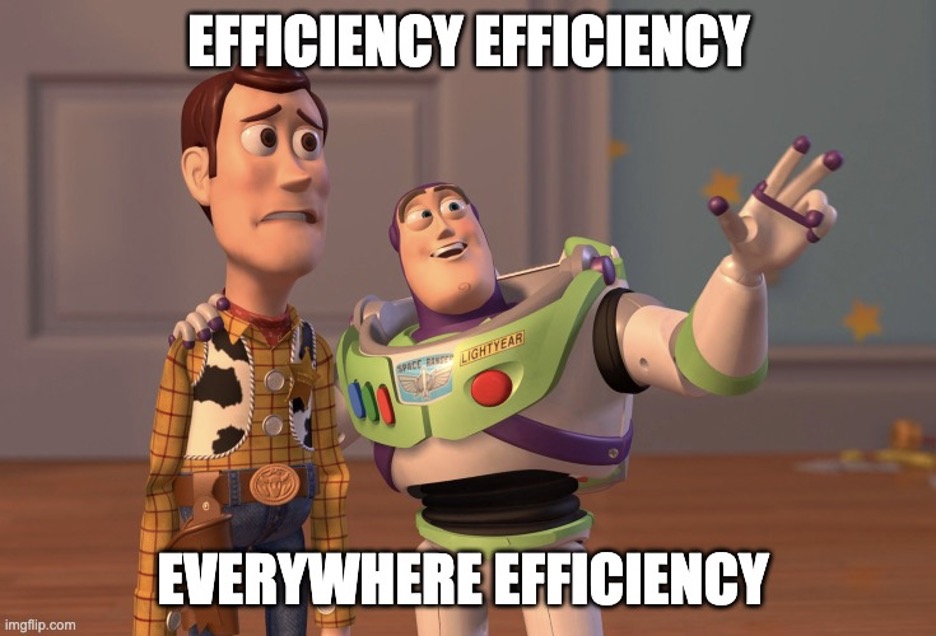
As students of Organization Studies, we often find ourselves in discussions, less often they get as intense as the one we had over the meaning and performativity of the word efficiency. This was challenging for us, because we constantly get confronted with the terms “efficiency”, “efficient” or “inefficient”. Subjectively perceived the word stem is used in every paper we read, which is not surprising as it is widely used and variable in its use. The most general definition of “efficiency” seems to be “doing the things right” (Drucker 1963). Other sources differ in their explanations. For example, the Cambridge Dictionary defines it as “the good use of time and energy in a way that does not waste any” (Cambridge Dictionary “Efficiency”). Another explanation provided by the dictionary: efficiency is “a situation in which a person, company, factory, etc. uses resources such as time, materials, or labor well, without wasting any” or “a situation in which a person, system, or machine works well and quickly” (Cambridge Dictionary “Efficiency”).
Hosted by the the Business & Society Program within the renowned Aspen Institute, the “Ideas Worth Teaching Award” is one of the most prestigious awards for teaching in business and management education. And I am very happy and proud to announce that the collaborative open course “Organizing in Times of Crisis” is among the winners of the 2020 competition – selected out of over 100 nominations.
As recipients of the award, Elke Schüßler (University of Linz) and myself had the honor to introduce our joint course in no longer than 45 seconds:
Over the course of the past decade, we can observe a growing trend towards (calls for) greater openness in various organizational contexts such as open innovation, open government, open strategy or open science. To some degree openness has been recast as a programmatic organizing principle, promising not just gains in efficiency (e.g., Chesbrough & Appleyard, 2007) but also in terms of transparency (Ohlson & Yakis-Douglas, 2019), accountability (Whittington, 2019) and inclusiveness (Mack & Szulanski, 2017). At the same time, we can observe a growing body of literature on diversity and inclusion that addresses openness in terms of inclusive organizing (Ferdman & Deane, 2014; Mor Barak, 2016; Nkomo et al., 2019; Shore et al., 2018; Zanoni et al., 2010).
Particularly regarding inclusiveness, however, we see a detachment of research on openness in various organizational contexts (e.g. strategy or innovation) from other scholarly debates on diversity and inclusion that address inclusive organizing as such (for an exception see Dobusch et al., 2019). With this sub-theme we seek to make a connection between these two separate research streams because we see three particular avenues for crosspollination that will advance our knowledge about inclusion, diversity and open organizing:
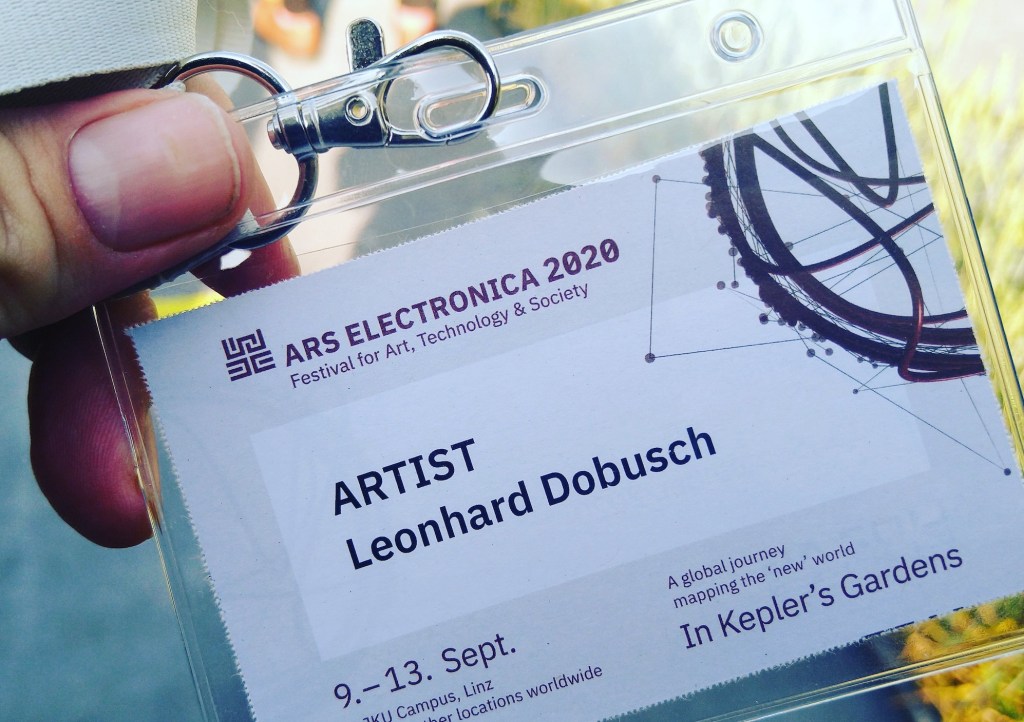
Im Rahmen des diesjährigen Ars Electronica Festivals in Linz war ich auf Einladung von Walter Ötsch Teil eines eintägigen Symposiums zum Thema “COVID-19 Crisis: Wie könnte/kann sich die Gesellschaft ändern?”. In drei Sessions durfte ich dabei neben Ötsch selbst noch mit der Philosophin Antonia Birnbaum, der German-Zero-Aktivistin Evelyn Bodenmeier und dem Soziologen Sighard Neckel unter Moderation von Ö1-Journalistin Renata Schmidtkunz diskutieren. Mein Vortrag widmete sich dem Thema “Neue digitale Öffentlichkeit für neue Formen solidarischer Verantwortlichkeit”, die Slides finden sich wie üblich bei Slideshare:
This essay is provided by Ajla Nesimovic, former student in the master program Organization Studies at University of Innsbruck, and based on her master thesis.
“This master thesis is a story,” are the first words of my thesis. If you are now frowning and thinking what the heck I am talking about, then you are definitely not alone. Once an inspiring person taught me that managing expectations could be helpful as it might give a sense of motivation and direction. Now that I have told you that my master thesis is a story you are probably expecting a lot of fairy tale and little scientific appropriateness. You are not that far off! I definitely write a lot about ambiguities and contradictions of theorists. In later sections, I critically reflect on my very own work and further identify it as an invention with a lot of ambiguities and contradictions too. Nevertheless, my supervisor wanted me to write a blogpost about my master thesis. I suppose, it’s because of the jokes.
The story is multilayered as it consists of various story lines which are differing from each other but are still overlapping and coexisting. My master thesis, therefore, can be read in many different ways: as a love letter to the study program Organization Studies; as an imaginary and intellectual debate between my AI professor and myself; as a story about myself; or as a story about algorithms. I am not offering these different opportunities to potential readers by accident, since this thesis was guided by an interpretation of Deleuze’s and Guattari’s process philosophy (1994).
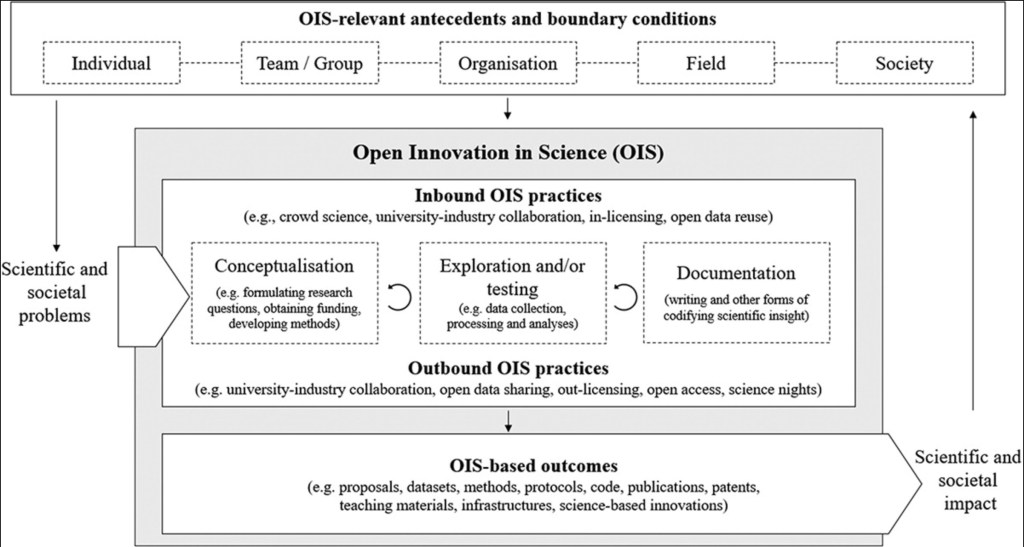
Openness and collaboration in scientific research are attracting increasing attention from scholars and practitioners alike. However, a common understanding of these phenomena is hindered by disciplinary boundaries and disconnected research streams. We link dispersed knowledge on Open Innovation, Open Science, and related concepts such as Responsible Research and Innovation by proposing a unifying Open Innovation in Science (OIS) Research Framework. This framework captures the antecedents, contingencies, and consequences of open and collaborative practices along the entire process of generating and disseminating scientific insights and translating them into innovation. Moreover, it elucidates individual-, team-, organisation-, field-, and society‐level factors shaping OIS practices. To conceptualise the framework, we employed a collaborative approach involving 47 scholars from multiple disciplines, highlighting both tensions and commonalities between existing approaches. The OIS Research Framework thus serves as a basis for future research, informs policy discussions, and provides guidance to scientists and practitioners.
Ali Aslan Gümüsay, Head of the Innovation & Entrepreneurship Research Group at the Humboldt Institute for Internet and Society (HIIG) and Postdoctoral Researcher at the University of Hamburg, is among the contributors to the collaborative open course “Organizing in Times of Crisis”. Together, we have published a brief reflection piece on organizational coping-strategies with the Corona crisis from reactive to proactive:
In June, the Strategizing Activities and Practices (SAP) Interest Group is going to host two webinars. They are part of a webinar series, where leading SAP scholars introduce SAP newbies to the foundations of SAP research, and provide more advanced participants with added clarity around core issues related to strategizing activities and practices.
On June, 4th, Paul Spee, Associate Professor in Strategy at the University of Queensland, will present on “”Strategy-as-practice and the Focus on Sociomateriality”. On June 18th, Leonhard Dobusch will present on “Open Strategy as a Practice”.
If you are interested in attending one or both of the free webinars, please register here:
Wie kaum je zuvor, leben wir im Moment. Jede tagtägliche Veränderung hat gravierende und weitreichende Auswirkungen auf Wirtschaft und Gesellschaft. Gebannt blicken wir auf Entwicklungen der Zahlen von Neu-Infektionen, wirtschaftliche Auswirkungen und tief greifende Eingriffe in das persönliche Leben. […] Doch welche weiteren Veränderungen in Zusammenarbeit, Management und Technologie haben nun langfristige Auswirkungen?
Die Veranstaltung findet ohne Publikum aber live im Internet statt, Zugangsdaten werden nach der Anmeldung zeitgerecht übermittelt.





 ConJunction