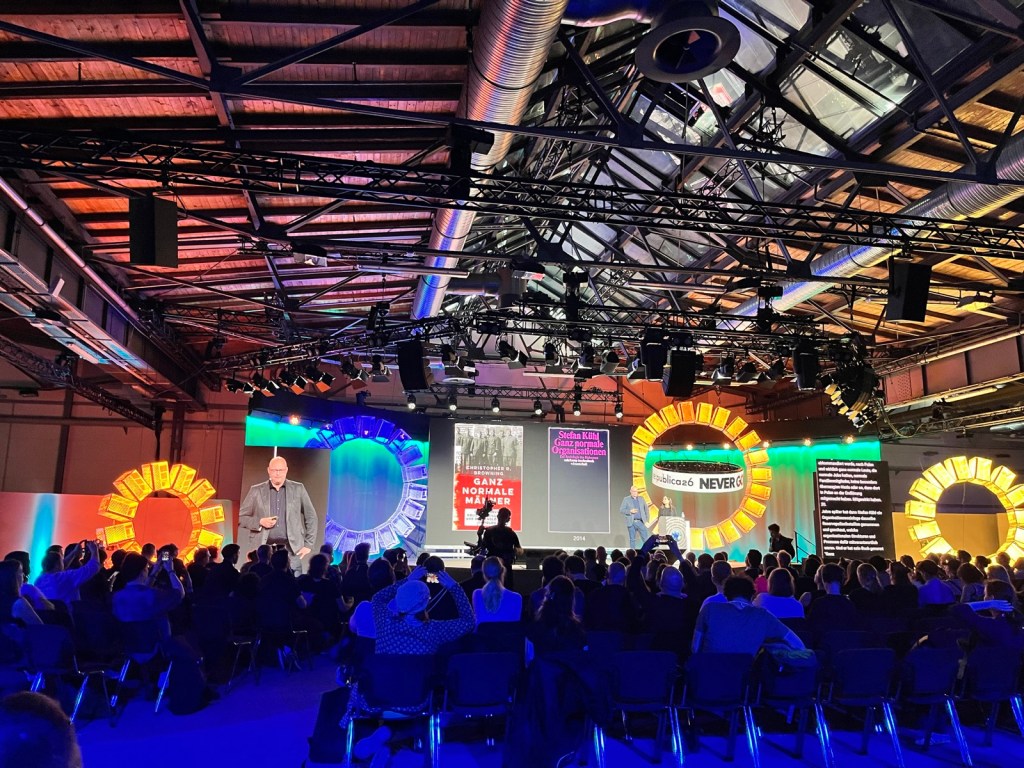
Zum ersten Mal durfte ich dieses Jahr bei der Berliner re:publica, Europas größter Konferenz zur digitalen Gesellschaft, auf Stage 1 vortragen. Gemeinsam mit der Kommunikationswissenschaftlerin Nadia Zaboura habe ich zum Thema “Ganz normale Medien und ihr Beitrag zum Comeback des Faschismus” gesprochen. Aus der Ankündigung des Vortrags:
Das ist keine Übung. Der Vormarsch neofaschistischer Ideen und Parteien ist real. Ermöglicht und mitbefeuert hat diesen Vormarsch ganz normaler Journalismus in ganz normalen Medien – mit vermeintlich neutralem Blick und falscher Objektivität.
Autoritäre und neofaschistische Kräfte profitieren weltweit von einer Doppelstrategie: Einerseits setzen sie seit Jahren auf neue Digitalplattformen, um Menschen direkt zu erreichen – und profitieren dort von deren Algorithmen. Andererseits profitieren sie aber auch von ganz normalem Journalismus in ganz normalen Medien und deren “Algorithmen”: falsche Ausgewogenheit, falsche Gleichsetzung, falsche Dilemmata, Doppelstandards, Mikrofonständerjournalismus und viele weitere Standardsituationen des Medienversagens mehr.
Entscheidend ist dabei, dass diese nicht Ausnahme- sondern Regelfall von normalem, sich als möglichst ‘neutral’ oder ‘objektiv’ verstehendem Journalismus sind. Es ist nicht nur der ‘Boulevard’, es sind nicht nur Axel-Springer- und Newscorp-Medien. Sondern es sind dominante Medienlogiken bis tief hinein in den Qualitätsjournalismus, die sie zu hilflosen Helfern und damit aktiven Ermöglichern neofaschistischer Kommunikationsstrategien und Raumnahme machen.
Die zentrale Ableitung unseres Vortrags: Journalism-as-usual muss enden. Medien ohne klare, antifaschistische Ausrichtung sind Teil des Problems und nicht der Lösung.