New Handbook Chapter: »Open Strategy as a New Form of Strategizing«

Together with Julia Hautz and Thomas Ortner (both situated at the neighboring department of Strategic Management and Leadership), I had the honor to contribute to the most recent iteration of the Cambridge Handbook of Strategy as Practice with a chapter on “Open Strategy as a New Form of Strategizing”:

[W]e can observe an increasing trend towards more inclusive and transparent strategizing. From a practice perspective, this trend can be described as a shift in the practices of strategy-making. [We] describe the different practices of inclusiveness and transparency and show how they relate to each other. [We] then identify and review distinctive themes of strategy as practice research on Open Strategy. This includes the role of technologies and materiality in enabling openness, the discursive practices and processes underpinning openness, the temporal dynamics of open processes, the difference between controlled and uncontrolled forms of openness and the dialectic relationship between openness and closure.

Check out the article here – and please contact me to receive a personal copy in case your institution does not provide access to the handbook.

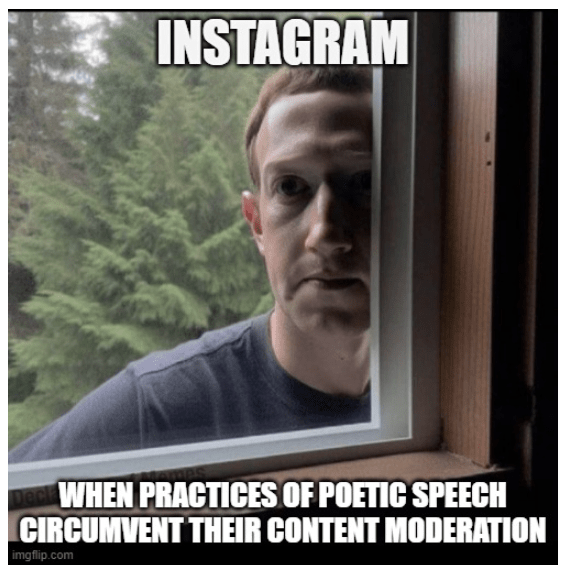
New Paper: “‘Your Very Existence Goes Against Our Community Guidelines’: Interrogating norms of contributorship through poetic speech acts on Instagram”

Digital platforms, like Instagram, offer various ways for self-expression, support, and community building, but their content moderation practices reveal deep-rooted biases that affect who gets to participate platform organizing. In our recent paper “‘Your Very Existence Goes Against Our Community Guidelines’: Interrogating norms of contributorship through poetic speech acts on Instagram” in Organization Studies, we – Monica Nadegger, Milena Leybold and Sean Kenney – explore how these platforms enforce norms through content moderation, shaping what contributions are deemed appropriate. Find out more in this blog post and in the full paper.

Continue reading “New Paper: “‘Your Very Existence Goes Against Our Community Guidelines’: Interrogating norms of contributorship through poetic speech acts on Instagram””

New Paper: “Dear vulnerability … writing toget-her to escape and resist the neoliberal university”

I – Ellen, Milena, Monica – wrote toget-her, becoming the Collective I. It is not just a paper. It’s love, pain, struggle, courage, connection and togetherness, navigating the challenges of academic writing as early career scholars. It’s an intimate, personal encounter of my vulnerabilities, embraced in and through a collective letter diary. 

And it’s open access, open to all people interested in writing differently toget-her.

You can find it here.

New Book Chapter: »Searching for Transformative Potential: Comparing Conceptualizations of Open, Inclusive and Alternative Organizations«

Together with my sister Laura and Katharina Kreissl, we were given the opportunity to contribute a chapter to “The Handbook of Organizing Economic, Ecological and Societal Transformation”, edited by Elke Weik, Chris Land and Ronald Hartz. In our contribution entitled “Searching for Transformative Potential: Comparing Conceptualizations of Open, Inclusive and Alternative Organizations”, we analyze scholarly approaches that explicitly imagine organizations as capable of ‘doing good’ under the labels of “open”, “inclusive” or “alternative. Check out the abstract below:

Continue reading “New Book Chapter: »Searching for Transformative Potential: Comparing Conceptualizations of Open, Inclusive and Alternative Organizations«”

Neuer juridikum-Aufsatz: »Hört die Signa(le): rechtspolitische Fragen und Ableitungen aus dem Fall der Signa-Gruppe«

Auch wenn ich seit meiner Promotion in meiner Forschung immer wieder rechtswissenschaftliche Themen, vor allem im Bereich des Immaterialgüterreechts, bearbeitet hatte, habe ich kaum in rechtswissenschaftlichen Zeitschriften publiziert. Umso mehr freut es mich, dass kürzlich ein gemeinsam mit Jakob Sturn (Momentum Institut) verfasster, rechtswissenschaftlicher Beitrag in der Zeitschrift juridikum über “rechtspolitische Fragen und Ableitungen aus dem Fall der Signa-Gruppe” erschienen ist.

Continue reading “Neuer juridikum-Aufsatz: »Hört die Signa(le): rechtspolitische Fragen und Ableitungen aus dem Fall der Signa-Gruppe«”

New Article: »Being (Ab)normal – Be(com)ing Other: Struggles Over Enacting an Ethos of Difference in a Psychosocial Care Centre«

This image was created by ChatGPT 4o with Dall-E 2 based upon the title of the article.

Please check out the new article entitled “Being (Ab)normal – Be(com)ing Other: Struggles Over Enacting an Ethos of Difference in a Psychosocial Care Centre,” co-authored with Bernadette Loacker and accepted for publication in Journal of Business Ethics. The abstract reads as follows:

Responding to recent calls from within critical MOS and organizational ethics studies to explore questions of difference and inclusion ‘beyond unity and fixity’, this paper seeks to enrich the debate on difference and its negotiation in organizations, thereby foregrounding difference as the contested and ever-changing outcome of power-invested configurations of practice. The paper presents an ethnographic study conducted in a psychosocial day-care centre that positions itself as a ‘space of multiplicity’ wherein ‘it is normal to be different’. Highlighting the context-specific challenges and struggles encompassing mental ill-health as a category of difference deviating from the norm, our paper contributes to a critical-affirmative understanding of difference. We foster an approach that values normative orientations such as ‘egalitarian difference’ and ‘difference as multiplicity’ yet avoids idealising portrayals of an ethics of difference that challenges normalcy and unconditionally favours otherness and calls for ‘radically other kinds of difference’.

Please contact us if your institution does not provide access to the full text of the article.

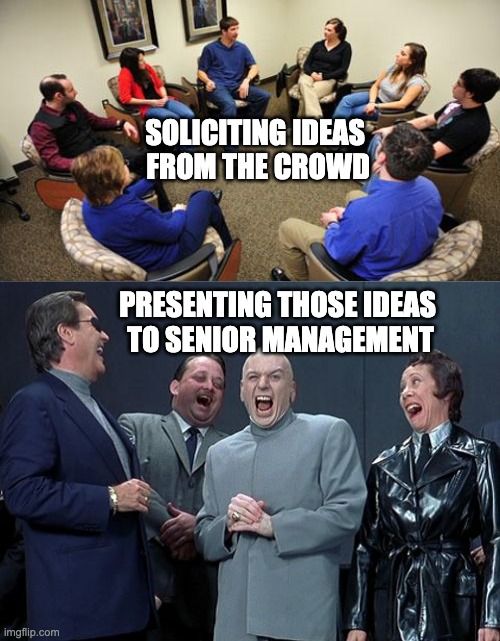
New Article in ‘Innovation: Organization & Management’: »Barracudas, Piranhas and crowds: making ideas valuable in pharmaceutical innovation through opening and closing practices of valuation«

Led by Katharina Zangerle, who collected data at a large pharmaceutical corporation in Austria and Switzerland, we are very happy to announce the first joint article by three members of the organization unit at the Department of Organization and Learning, as Katharina had teamed up with Richard Weiskopf and myself for crafting the article.

The study entitled “Barracudas, Piranhas and crowds: making ideas valuable in pharmaceutical innovation through opening and closing practices of valuation” is now available open access at Innovation: Organization & Management. The abstract reads as follows:

Attributing value to ideas is central in the journey from generating and elaborating ideas, to realising ‘creative’ products and processes. In this study, we explore the ways in which ideas are attributed value through practices of valuation in the innovation process. We examine valuation practices and intentionally and deliberately designed digital and analog spaces in pharmaceutical innovation across various stages of the ‘idea journey’. The findings shed light on the valuation of objects and emerging ideas as well as unveiling how pharmaceutical firms adapt valuation practices in times of crisis, when the imperative to generate novel solutions intensifies. The empirical case illustrates the interplay between ‘opening’ valuation practices, such as crowd votings facilitated by a digital ideation software, and ‘closing’ mechanisms, such as idea rankings within exclusive evaluation boards, or idea clustering through the digital device, as well as how these practices enable a working consensus on defining what qualifies as new and valuable within the organisation. While closing valuation with its quantifying practices might allow for efficient decision-making in organising novelty, it may turn out to be problematic when it comes to achieving organisational legitimacy in innovation processes. Balancing opening and closing mechanisms seems crucial in innovation processes, particularly in times of uncertainty. Taking a closer look at the spatial and temporal conditions and dynamics of valuation, as well as the role of digital technology in the production of value advances the understanding of how value is produced.

The research has been conducted in the realm of joint DFG and FWF research project on “Organized Creativity” and regulatory uncertainty in music and pharma.

New Article in The Conversation: “Why young workers are leaving fossil fuel jobs – and what to do if you feel like ‘climate quitting’”

Credit: Documerica on Unsplash

Increasingly, we can observe employees leaving a job due to concerns about their employer’s impact on the climate or because you want to work directly on addressing climate issues. Together with Grace Augustine (University of Bath), I have published an article in The Conversation on this phenomenon, often referred to as “climate quitting”:

If you’re contemplating leaving your job over climate concerns, you’re not alone. Half of Gen Z employees (people born between the late 1990s and early 2010s) in the UK have already resigned from a job due to a conflict in values. And 48% of people aged 18–41 say they are willing to take a pay cut to work for a company that aligns with their sustainability values.

Check out the whole article “Why young workers are leaving fossil fuel jobs – and what to do if you feel like ‘climate quitting’” over at The Conversation.

Discussion Proposal: Increasing Vaccine Access in a Shorter Time

As we have all experienced recently, to prevent pandemic outbreaks or mitigate an evolving pandemic crisis, it is of utmost importance to guarantee timely and global access to safe and effective vaccines. Through their pre-print, Milena Leybold (University of Innsbruck) and Konstantin Hondros (University of Duisburg-Essen) make a step towards opening a debate on “Increasing Vaccine Access in a Shorter Time. Alternative Regulatory Frameworks in Response to Pandemics.” 

População do DF conta com 47 tipos de vacinas e soros
Source: Agência Brasília, https://www.flickr.com/photos/64586261@N02/51330020291/
Continue reading “Discussion Proposal: Increasing Vaccine Access in a Shorter Time”

New Article in Organization Theory: »Taking Individual Choices Seriously: A process perspective of self-selection in strategy work«

I am very glad to announce that the article “Taking Individual Choices Seriously: A process perspective of self-selection in strategy work”, co-authored by Martin Friesl, Martin Brielmaier and myself, has been accepted for publication at Organization Theory and is already available online. Particularly the growing interest in open approaches to strategy, which at least formally invite broad audiences to participate in organizational strategy-making, was one of the reasons for writing this paper. Not just because an invitation to participate cannot hardly intrinsic motivation to actually contribute but also because inviting everyone does not guarantee that you will actually arrive at a more diverse and inclusive bunch of people (see also Dobusch et al., 2019). The abstract reads as follows:

An increasing body of work investigates the participation of a diverse set of actors in strategy making. We argue that extant research tends to gloss over a fundamental condition underpinning such participation: while participation may reflect a hierarchical mandate, insofar as it relates to the actual involvement of employees, it is the result of a process of self-selection. From this perspective, forms of participative strategizing are neither fully the outcome of deliberate top-down choice, nor do they form a random pattern that is subject to the whims of individual employees. Such forms of strategizing are rather, as we argue in this paper, based on an endogenous logic of whether and how an individual self-selects, and in turn involves her/himself in the process, or not. To conceptualize the broader phenomenon of strategy participation, we draw on practice theory to conceptualize how individuals knowingly choose to involve themselves in strategizing events and we develop in turn a process model of self-selection as an ongoing social accomplishment. This model elaborates different patterns of participation in strategy making (stabilizing and shifting trajectories) with variable emergent outcomes. We end the paper by discussing the implications of our theorizing for ongoing research on open and participatory strategizing, and for the body of work on strategy as practice.

The paper is open access available at Organization Theory. Summary threads ft. #1paper1meme can be found over at Mastodon and Twitter.