Professor of Organization at University of Innsbruck | Co-founder Momentum Conference and Momentum Institut | ZDF Verwaltungsrat | Blogging at netzpolitik.org
Location des WKOrg-Nachwuchsworkshops 2017 (Foto: Leonhard Dobusch, CC-BY)
Rund 100 Organisations- und Managementforschende an Universitäten in Deutschland, Österreich und der Schweiz treffen sich einmal im Jahr zur Tagung der Wissenschaftlichen Kommission Organisation (WKOrg) des Verbands der HochschullehrerInnen für Betriebswirtschaft. Als Ausrichter fungiert immer für zwei Jahre ein Organisationslehrstuhl, letzte Woche fand die Tagung an der Universität Hamburg unter Leitung von Jetta Frost statt. Noch vor Beginn der eigentlichen Tagung findet dabei traditionell ein Workshop für Postdocs und HabilitandInnen statt. Continue reading “Nachwuchsworkshop Organisationsforschung in Hamburg: Zur Bedeutung digitaler Präsenz”→
My talk on “Sharing Economy between Commons and Commodification” (PDF of the paper) is scheduled for the session on Friday, January 12, 9.00 a.m. at Science Park 1, MT 132.
Gemeinsam mit Maximilian Heimstädt durfte ich noch im alten Jahr einen Beitrag für die aktuelle Ausgabe von “Forum Wissenschaft”, der Zeitschrift des Bunds demokratischer Wissenschaftlerinnen und Wissenschaftler (BdWi) zum Thema digitale Bildung beisteuern. Der Lead-Text stammt zwar nicht von uns, trifft aber ziemlich gut, worum es uns in dem Beitrag geht:
Digitalisierung im Bildungsbereich gehört zu den meistdiskutierten Fragen, wenn es um Modernisierungen im Bildungswesen geht. Im Fokus der öffentlichen Debatte steht dabei vor allem eine umfassende Verbesserung der technologischen Ausstattung von Schulen. Doch der alleinige Blick auf den technischen Fortschritt ist unzureichend. Vielmehr kommt es auf offenen Zugang und freie Verfügbarkeit an, wie Leonhard Dobusch und Maximilian Heimstädt erläutern.
Leider ist Forum Wissenschaft selbst nicht offen zugänglich bzw. (noch) keine Open-Access-Zeitschrift. Mit Zustimmung der Redaktion – und dem Thema entsprechend – dürfen wir den Beitrag hier als PDF im Volltext unter der Lizenz Creative Commons Namensnennung (CC-BY) zugänglich machen.
In the course of the joint research seminar by Julia Brandl and myself, we are happy to host Elke Schüßler, Professor on Organization at Johannes Kepler University Linz, with a guest lecture on “Focusing Events and Changes in the Governance of Garment Global Production Networks: The Case of Rana Plaza“.
Am Mittwoch, 16. November 2016, 17:00 Uhr, findet im Kaiser-Leopold-Saal der Katholisch-Theologischen Fakultät Karl-Rahner-Platz 3, A-6020 Innsbruck die Antrittsvorlesung von Richard Weiskopf zum Thema “Wieviel ‚Wahrheit’ verträgt die Organisation? Die Praktik der parrhesia als Herausforderung für moderne Organisation.”
Antrittsvorlesungen richten sich an ein breites Publikum und wir würden uns freuen, bekannte Gesichter aus der Organization Studies Innsbruck Community dort zu sehen.
Details und eine ausführliche Biographie von Richard Weiskopf finden sich im Flyer zur Veranstaltung. Um Anmeldung wird bis spätestens Freitag, 11. November 2016, an veranstaltung-bw@uibk.ac.at gebeten.
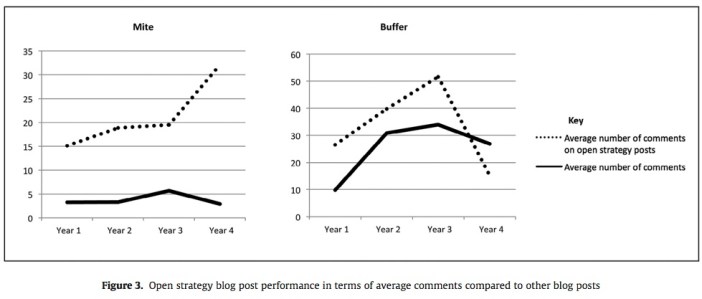
Thomas Gegenhuber and I have tracked open strategy-making practices on blogs of two ventures (Berlin-based mite and buffer in San Francisco) over the period of four years to answer the research question “how new ventures use open strategy-making as impression management over time?”. The article entitled “Making an Impression Through Openness: How Open Strategy-Making Practices Change in the Evolution of New Ventures” has now been accepted for publication in Long Range Planning as part of a special issue on Open Strategy (edited by Julia Hautz, David Seidl and Richard Whittington). The abstract reads as follows:
While previous open strategy studies have acknowledged open strategy’s function as an impression management instrument, their focus has mostly been on short episodes. The impression management literature, meanwhile, pays openness scant attention. By studying how new ventures engage in open strategy-making, we track how open strategy-making and respective impression management benefits evolve over time. Specifically, we draw on a comparative case study of two firms’ blog communication on strategy-related issues and corresponding audience responses over a four-year period. We identify three distinct modes of how organizations engage in open strategy-making with external audiences and show how each mode is related to a specific set of impression management effects. Having established the impression management functions of these modes, we then demonstrate how open strategy-making contributes to new ventures’ quests for legitimacy as they evolve. In the launch phase, dialoguing with blog audiences helps a venture attract endorsements for its organization and products. As the venture grows, concentrating on broadcasting relevant strategic information may attract media audiences’ additional support for pursuing openness as a desirable organizational practice.
Thomas has also blogged about our study. If your institution does not provide access to the article just e-mail me and I would be happy to share it with you. For more on open strategy-making in general and other contributions to the special issue in Long Range Planning, join the recently launchedOpen Strategy Network.




 In the course of the joint research seminar by Julia Brandl and myself, we are happy to host


 ConJunction
