New Essay in »Digital Responsibility: Building Bridges Between Organization Theory and Information Systems« in SBUR

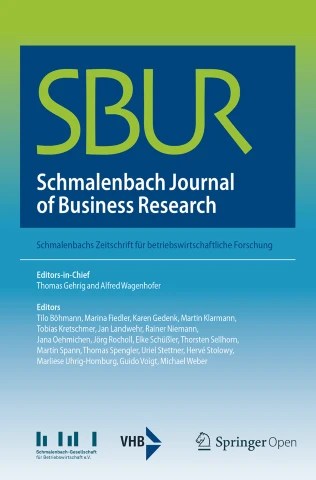
Cover of SBUR journal

In the wake of a workshop on “Digital Responsibility” at the Annual Meeting of the Association of Professors of Business Administration (VHB) at Leuphana University Lüneburg that brought together scholars and perspectives from organization studies (OS) and information systems (IS), the workshop organizers Hannah Trittin-Ulbrich, Markus Zimmer and Stefanie Habersang edited a curated essay collection to be published in Schmalenbach Journal of Business Research (SBUR).

Together with Elke Schüßler and Maren Gierlich-Joas, I contributed one such essay offering “Interdisciplinary Theoretical Reflections On Digital Responsibility”. It is summarized in the introducation as follows:

Essay 1 situates the first and second fault line in OS and IS scholars ongoing discourses on theory. The authors distinguish three views of theorizing that we can find in both disciplines. They highlight that OT and IS scholars often draw on the same theories, which provides a basis for interdisciplinary research into digital responsibility. Offering a vantage point, they present avenues for such research by their three views of theorizing.

The whole essay collection is available open access over at SBUR.

Learning from Disasters: A ‘Framing’ Perspective

Was the launch of Siri a “disaster”? Depends on how you frame it. (Foto, CC BY-SA 2.0

This research essay is authored by Melissa Köhler, student in the master program Organization Studies at University of Innsbruck.

‘We do not learn from experiences… we learn from reflecting on experiences.’ (John Dewey)

Unexpected and unusual incidents in organizational life often result in a change from stable conditions into situations that are ‘far from equilibrium’ (Rudolph and Repenning, 2002). Even if undesirable incidents entail an organizational breakdown and misery, organizations can try to make sense of the circumstances. They have the possibility to reflect and learn in order to prevent such occasions, or to improve their response the next time. To understand how organizations learn from disasters, current scientific literature mainly analyzes very popular incidents such as the Mount Everest climbing accident in 1996 or natural catastrophes. In order to gain substantial insights on how organizations learn from disastrous situations, this focus on extreme incidents seems quite narrow-minded. Who defines whether a specific event is a disaster or not? A ‘Framing’ perspective could help to induce a better understanding on how organizations learn from such situations.

Continue reading “Learning from Disasters: A ‘Framing’ Perspective”