International Research Project:
“Local Journalism and Municipal Communication in digital Transformation”

(from left to right: Urs DahindenMatthias KünzlerUlla AutenriethSimon GadrasAlwin BaumhöverJohanna BurgerCaroline DalmusMalte Meyer)

The international research project “Local Journalism and Municipal Communication in Digital Transformation” brought together researchers from Switzerland, Germany, France, Italy, and Austria to explore the digital transformation of local journalism and municipal communication. 

Our team presented the findings at the 10th European Communication Research and Education Association (ECREA) conference in Ljubljana, Slovenia, held from September 24 to 27. This year’s theme, “Communication & Social (Dis)order”, provided a platform for our panel presentation titled “Innovation as a Threat to Democracy? Effects of Local Communication’s Transformation on Democracies”. Here, we discussed the potential risks and opportunities of digital innovation in local communication, particularly the evolving interdependencies between municipalities and local media. 

For more information and access to project results, including practical recommendations for local media and municipalities, visit the project’s website where the results are available in German language.

Call for Applications: PhD Position and Student Assistant Position in Organization Studies

We are hiring:

Please do not hesitate to contact me in advance in case any questions arise.

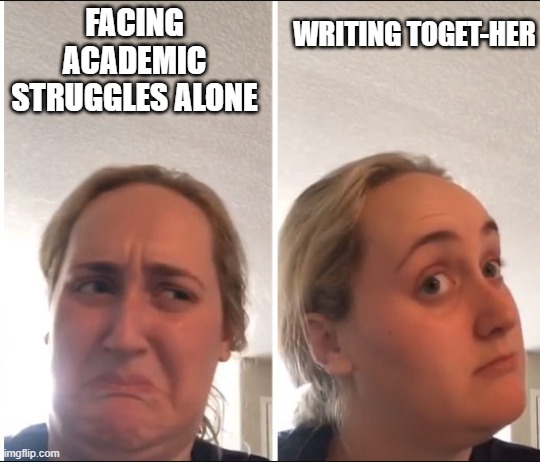
New Paper: “Dear vulnerability … writing toget-her to escape and resist the neoliberal university”

I – Ellen, Milena, Monica – wrote toget-her, becoming the Collective I. It is not just a paper. It’s love, pain, struggle, courage, connection and togetherness, navigating the challenges of academic writing as early career scholars. It’s an intimate, personal encounter of my vulnerabilities, embraced in and through a collective letter diary. 

And it’s open access, open to all people interested in writing differently toget-her.

You can find it here.

New Book Chapter: »Searching for Transformative Potential: Comparing Conceptualizations of Open, Inclusive and Alternative Organizations«

Together with my sister Laura and Katharina Kreissl, we were given the opportunity to contribute a chapter to “The Handbook of Organizing Economic, Ecological and Societal Transformation”, edited by Elke Weik, Chris Land and Ronald Hartz. In our contribution entitled “Searching for Transformative Potential: Comparing Conceptualizations of Open, Inclusive and Alternative Organizations”, we analyze scholarly approaches that explicitly imagine organizations as capable of ‘doing good’ under the labels of “open”, “inclusive” or “alternative. Check out the abstract below:

Continue reading “New Book Chapter: »Searching for Transformative Potential: Comparing Conceptualizations of Open, Inclusive and Alternative Organizations«”

»Taking Stock of Open Strategy«: Opening Panel at Oxford & Zurich Open Strategy Workshop

Opening Panel “Taking Stock of Open Strategy” (from right to left: Fleur Deken, Alex Wilson, Basak Yakis-Douglas, Julia Hautz, Leonhard Dobusch)

Right before attending the EGOS Colloquium in Milano, University of Zurich’s David Seidl hosted an international workshop on Open Strategy (co-organized with Richard Whittington, Oxford University). Thanks to the great organizing team, the panel as well as the other plenary sessions were streamed and the video recordings are online available. I had the honor to kick-off the opening panel on “Taking Stock of Open Strategy”.

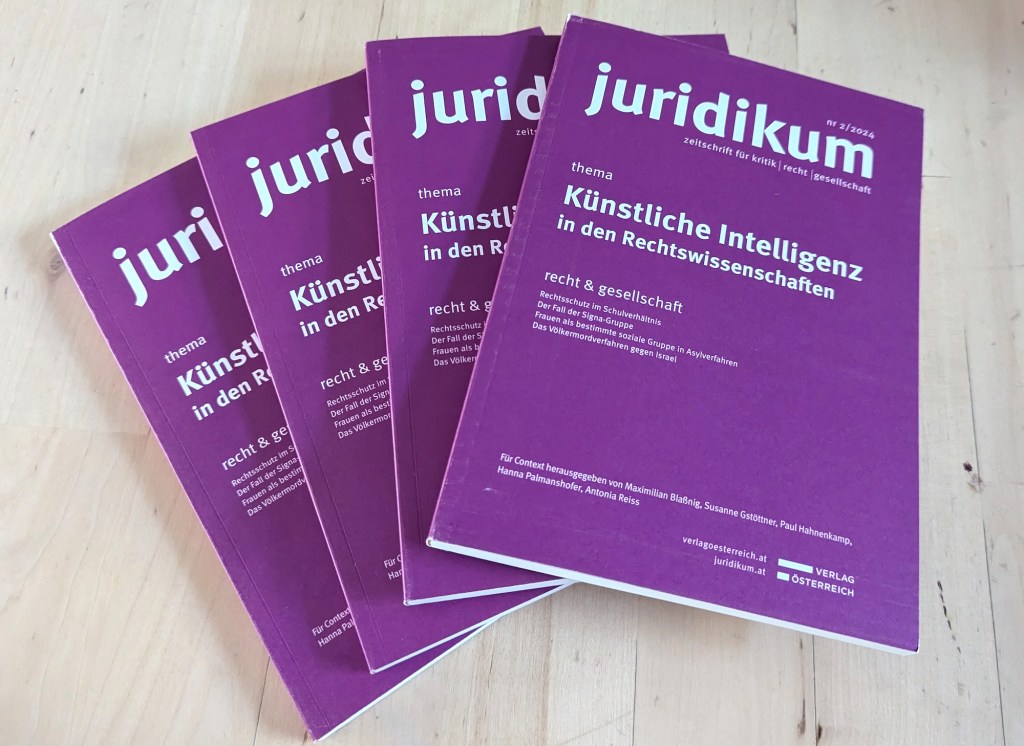
Neuer juridikum-Aufsatz: »Hört die Signa(le): rechtspolitische Fragen und Ableitungen aus dem Fall der Signa-Gruppe«

Auch wenn ich seit meiner Promotion in meiner Forschung immer wieder rechtswissenschaftliche Themen, vor allem im Bereich des Immaterialgüterreechts, bearbeitet hatte, habe ich kaum in rechtswissenschaftlichen Zeitschriften publiziert. Umso mehr freut es mich, dass kürzlich ein gemeinsam mit Jakob Sturn (Momentum Institut) verfasster, rechtswissenschaftlicher Beitrag in der Zeitschrift juridikum über “rechtspolitische Fragen und Ableitungen aus dem Fall der Signa-Gruppe” erschienen ist.

Continue reading “Neuer juridikum-Aufsatz: »Hört die Signa(le): rechtspolitische Fragen und Ableitungen aus dem Fall der Signa-Gruppe«”

Researching Together: Innsbruck Organization Scholars convene at the 40th EGOS Colloquium in Milan

(from left to right: Sabine Bösl, Marilyn Poon, Richard Weiskopf, Aleksander Groth, Laverne Chore, Alwin Baumhöver, Julia Waldegger, Felix Schmid, Monica Nadegger, Anna Schneider, Milena Leybold, Leonhard Dobusch, Katharina Zangerle, Andrea Kastl, Bernadette Bullinger)

The motto of the 40th Colloquium of the European Group of Organization Studies (EGOS) in Milan was “Crossroads for Organizations: Time, Space and People.” To some degree, the group photo above is exactly the result of organizing time and space at a crossroads to gather all participants related to University of Innsbruck’s Department of Organization and Learning that were contributing to the event.

Continue reading “Researching Together: Innsbruck Organization Scholars convene at the 40th EGOS Colloquium in Milan”

Re:publica 2024: Von »Engaged Scholarship« zum Vortrag über »Boom, Bust & Benko«

In den letzten Jahren habe ich auf der spannendsten Digitalkonferenz Europas, der re:publica in Berlin, über Medienwandel im Allgemeinen und die digitale Transformation öffentlich-rechtlicher Medien im Besonderen gesprochen. Auch dieses Jahr habe ich gemeinsam mit NDR-Rundfunkrätin Beate Bäumer ein Meetup für “Öffentlich-Rechtliche auf der re:publica” moderiert, wobei der Fokus darauf lag, “Was Aufsichtsgremien jetzt lernen müssen. Erfahrungen und Tipps.”

Foto: D64 e.V.

Mein Hauptvortrag widmete sich jedoch jenem Thema, das mich im letzten Jahr mit Sicherheit am meisten beschäftigt hat: der Analyse und Erklärung des finanzialisierten Geschäftsmodells von René Benkos Signa-Gruppe.

Foto: @squadrat.bsky.social

Unter dem Titel “Boom, Bust und Benko: Was kümmert uns die Millionenpleite?” habe ich mich an einer ersten Antwort auf Fragen wie diese hier versucht:

Continue reading “Re:publica 2024: Von »Engaged Scholarship« zum Vortrag über »Boom, Bust & Benko«”

New Article: »Being (Ab)normal – Be(com)ing Other: Struggles Over Enacting an Ethos of Difference in a Psychosocial Care Centre«

This image was created by ChatGPT 4o with Dall-E 2 based upon the title of the article.

Please check out the new article entitled “Being (Ab)normal – Be(com)ing Other: Struggles Over Enacting an Ethos of Difference in a Psychosocial Care Centre,” co-authored with Bernadette Loacker and accepted for publication in Journal of Business Ethics. The abstract reads as follows:

Responding to recent calls from within critical MOS and organizational ethics studies to explore questions of difference and inclusion ‘beyond unity and fixity’, this paper seeks to enrich the debate on difference and its negotiation in organizations, thereby foregrounding difference as the contested and ever-changing outcome of power-invested configurations of practice. The paper presents an ethnographic study conducted in a psychosocial day-care centre that positions itself as a ‘space of multiplicity’ wherein ‘it is normal to be different’. Highlighting the context-specific challenges and struggles encompassing mental ill-health as a category of difference deviating from the norm, our paper contributes to a critical-affirmative understanding of difference. We foster an approach that values normative orientations such as ‘egalitarian difference’ and ‘difference as multiplicity’ yet avoids idealising portrayals of an ethics of difference that challenges normalcy and unconditionally favours otherness and calls for ‘radically other kinds of difference’.

Please contact us if your institution does not provide access to the full text of the article.

New Article in ‘Innovation: Organization & Management’: »Barracudas, Piranhas and crowds: making ideas valuable in pharmaceutical innovation through opening and closing practices of valuation«

Led by Katharina Zangerle, who collected data at a large pharmaceutical corporation in Austria and Switzerland, we are very happy to announce the first joint article by three members of the organization unit at the Department of Organization and Learning, as Katharina had teamed up with Richard Weiskopf and myself for crafting the article.

The study entitled “Barracudas, Piranhas and crowds: making ideas valuable in pharmaceutical innovation through opening and closing practices of valuation” is now available open access at Innovation: Organization & Management. The abstract reads as follows:

Attributing value to ideas is central in the journey from generating and elaborating ideas, to realising ‘creative’ products and processes. In this study, we explore the ways in which ideas are attributed value through practices of valuation in the innovation process. We examine valuation practices and intentionally and deliberately designed digital and analog spaces in pharmaceutical innovation across various stages of the ‘idea journey’. The findings shed light on the valuation of objects and emerging ideas as well as unveiling how pharmaceutical firms adapt valuation practices in times of crisis, when the imperative to generate novel solutions intensifies. The empirical case illustrates the interplay between ‘opening’ valuation practices, such as crowd votings facilitated by a digital ideation software, and ‘closing’ mechanisms, such as idea rankings within exclusive evaluation boards, or idea clustering through the digital device, as well as how these practices enable a working consensus on defining what qualifies as new and valuable within the organisation. While closing valuation with its quantifying practices might allow for efficient decision-making in organising novelty, it may turn out to be problematic when it comes to achieving organisational legitimacy in innovation processes. Balancing opening and closing mechanisms seems crucial in innovation processes, particularly in times of uncertainty. Taking a closer look at the spatial and temporal conditions and dynamics of valuation, as well as the role of digital technology in the production of value advances the understanding of how value is produced.

The research has been conducted in the realm of joint DFG and FWF research project on “Organized Creativity” and regulatory uncertainty in music and pharma.