Call for Papers: Special Issue on »Creativity and copyright in the shadow of GenAI«

Picture of the Webpage promoting the call for paper for the special issue on Creativity and copyright in the shadow of GenAI
Call for Papers for a Special Issue in Innovation: Organization & Management

Konstantin Hondros (HSU Hamburg), Astrid Mager (Austrian Academy of Sciences), Patricia Aufderheide (American University Washington), Patrick Cohedent (HEC Montréal) and myself are happy to announce a Call for Paper for a special issue on “Creativity and copyright in the shadow of GenAI: Managing and organizing creative content in the digitalization frenzy” to be published in “Innovation: Organization & Management”. Deadline for submission of full papers is September 30, 2026. Please do not hesitate to contact me or one of the other editors to discuss paper ideas.

In addition, we are planning an online paper development workshop to provide feedback on early-stage submissions on February 27, 2026. We encourage potential authors to submit an abstract of approximately 1,000 words describing their planned contribution, empirical material, and methodological approach (if applicable) by January 25, 2026, to konstantin.hondros@hsu-hh.de. Participation in the workshop is optional, and authors who do not attend are welcome to submit papers to the Special Issue.

Please find the full Call for Papers below:

Continue reading “Call for Papers: Special Issue on »Creativity and copyright in the shadow of GenAI«”

New Article: »Reviewing is Caring! Revaluing a Critical, but Invisibilized, Underappreciated, and Exploited Academic Practice«

How ChatGPT visually summarized the abstract of the paper on “Reviewing is Caring!”.

Together wie Mie Plotnikof (Aarhus University) and Matthias Wenzel (Leuphana University Lüneburg), I have written an essay proposing a care perspective to the way we organize academic peer review. The paper entitled “Reviewing is Caring! Revaluing a Critical, but Invisibilized, Underappreciated, and Exploited Academic Practice” has now been published open access in Organization. Check out the abstract below:

Continue reading “New Article: »Reviewing is Caring! Revaluing a Critical, but Invisibilized, Underappreciated, and Exploited Academic Practice«”

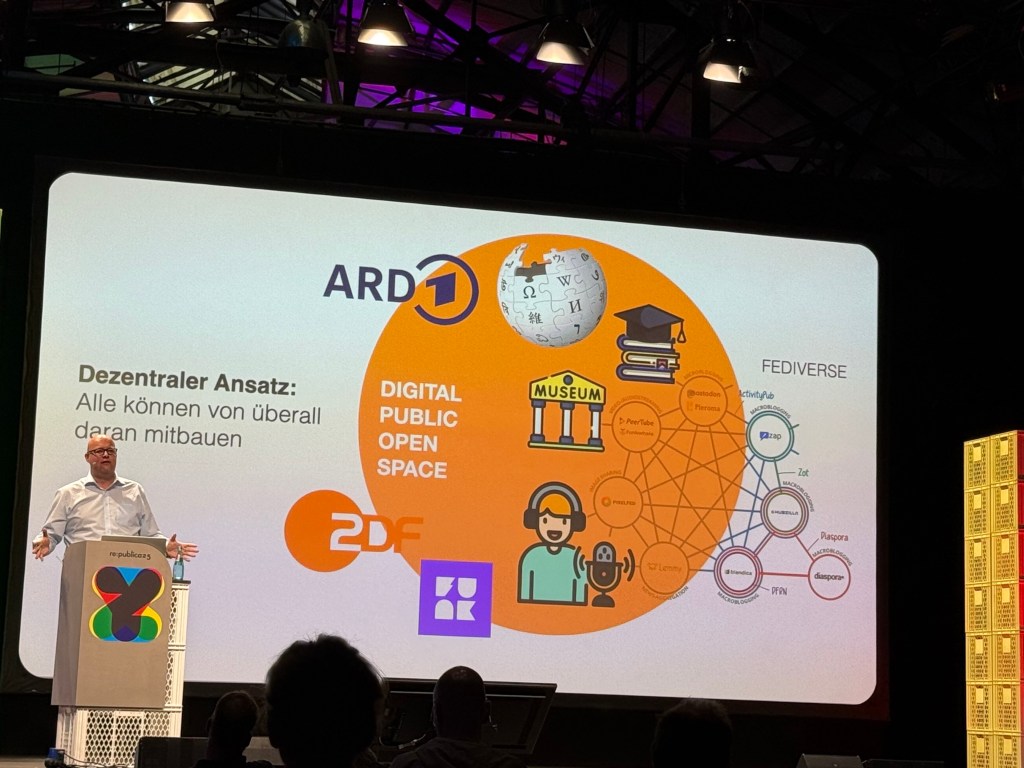
re:publica 2025: Zombies im Rundfunkrecht, rechtskommerzielles Tingeltangel und Governance von offen Digitalinfrastrukturen

Bei der jährlich in Berlin stattfindenden re:publica-Konferenz zur digitalen Gesellschaft werden die Bühnen nicht an Meistbietende verkauft, sondern größtenteils von ehrenamtlichen Track-Teams kuratiert. Umso größer die Ehre, dass ich auch dieses Jahr wieder Teil des Programms sein durfte.

In meinem Vortrag “Von Presseähnlichkeit zu öffentlich-rechtlicher Innovation” (Öffnet in neuem Fenster) habe ich mich vor allem mit immer noch bestehenden gesetzlichen Einschränkungen – Zombie-Regulierungen – für öffentlich-rechtliche Online-Angebote vor allem im Informations- und Nachrichtenbereich auseinandergesetzt. Während private Medienanbieter seit den 1970er Jahren für Einschränkungen öffentlich-rechtlicher Medien zum Schutz ihrer Geschäftsmodelle lobbyieren, lässt sich seither eine enorme Ausdehnung der Sphäre privat-kommerzieller Medien beobachten.

Continue reading “re:publica 2025: Zombies im Rundfunkrecht, rechtskommerzielles Tingeltangel und Governance von offen Digitalinfrastrukturen”

Vortrag: »Was ich schon immer wissen wollte über René Benkos Signa-Pleite«

Stadtteiltreff Wilten (Foto)

Am Dienstag, 20. Mai 2025, bin ich zu Gast im Stadtteiltreff Wilten, Leopoldstraße 33 a, 6020 Innsbruck, zu Vortrag und Diskussion zum Thema “Was ich schon immer wissen wollte über René Benkos Signa-Pleite”. Aus der Ankündigung:

Der Tiroler Immobilien-Unternehmer René Benko hat mit der Insolvenz der Signa-Gruppe die größte Pleite in Österreichs Zweiter Republik hingelegt. Doch auch jetzt, nach der Rekordpleite, liegt der mediale Fokus primär auf der Person René Benko und diversen pikant-privaten Details seines Lebensstils. Umso wichtiger wäre es, in Aufarbeitung den Immobilienfall Signa und nicht nur den mutmaßliche Kriminalfall Benko ins Zentrum zu rücken. Denn vieles von dem, was Signa erst groß und dann kaputt gemacht hat, ist weiterhin üblich.

Eintritt ist frei, schaut vorbei!

Neuer Artikel: »Kompetitiv und kooperativ: Zur Neuordnung des Verhältnisses von privaten und öffentlich-rechtlichen Medien im Digitalzeitalter«

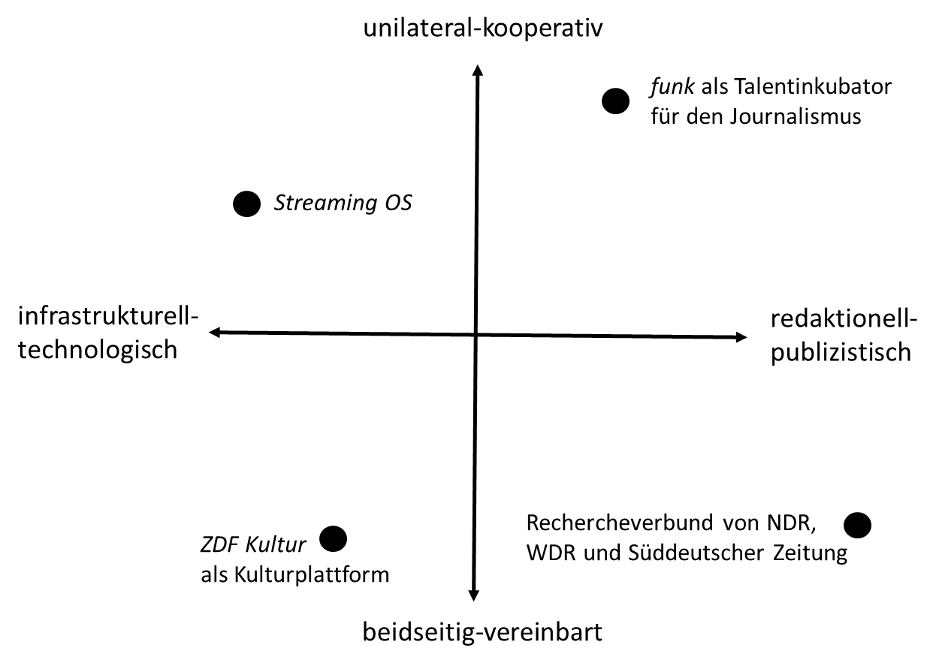
Abbildung: Formen kooperativer Beziehungen zwischen öffentlich-rechtlichen und privaten Medien mit Ankerbeispielen
Formen kooperativer Beziehungen zwischen öffentlich-rechtlichen und privaten Medien mit Ankerbeispielen

Das Verhältnis zwischen privaten und öffentlich-rechtlichen Medien wird in Deutschland traditionell als ein wettbewerbsorientiertes Nebeneinander und gegenseitiges Ausbalancieren wahrgenommen und geregelt. Der digitale Wandel und die zunehmende Dominanz von Plattformen stellen diese Sichtweise jedoch zunehmend in Frage.

Als Antwort darauf plädieren Christopher Buschow (Hamburg Media School) und ich in einem im Wirtschaftsdienst erschienen Beitrag für einen Coopetition-Ansatz, bei dem Wettbewerb und Zusammenarbeit nebeneinander bestehen, um demokratische Öffentlichkeiten zu stärken.

Continue reading “Neuer Artikel: »Kompetitiv und kooperativ: Zur Neuordnung des Verhältnisses von privaten und öffentlich-rechtlichen Medien im Digitalzeitalter«”

New Handbook Chapter: »Open Strategy as a New Form of Strategizing«

Together with Julia Hautz and Thomas Ortner (both situated at the neighboring department of Strategic Management and Leadership), I had the honor to contribute to the most recent iteration of the Cambridge Handbook of Strategy as Practice with a chapter on “Open Strategy as a New Form of Strategizing”:

[W]e can observe an increasing trend towards more inclusive and transparent strategizing. From a practice perspective, this trend can be described as a shift in the practices of strategy-making. [We] describe the different practices of inclusiveness and transparency and show how they relate to each other. [We] then identify and review distinctive themes of strategy as practice research on Open Strategy. This includes the role of technologies and materiality in enabling openness, the discursive practices and processes underpinning openness, the temporal dynamics of open processes, the difference between controlled and uncontrolled forms of openness and the dialectic relationship between openness and closure.

Check out the article here – and please contact me to receive a personal copy in case your institution does not provide access to the handbook.

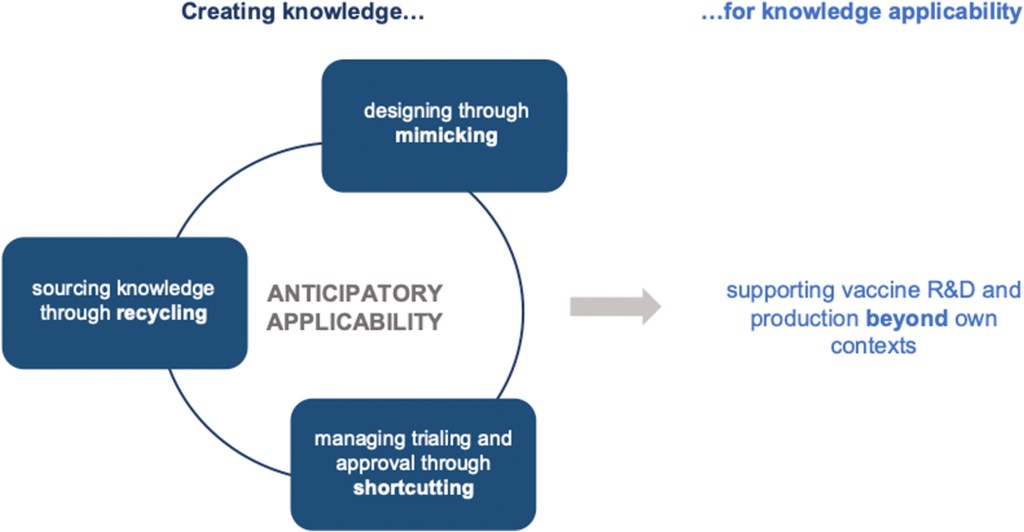
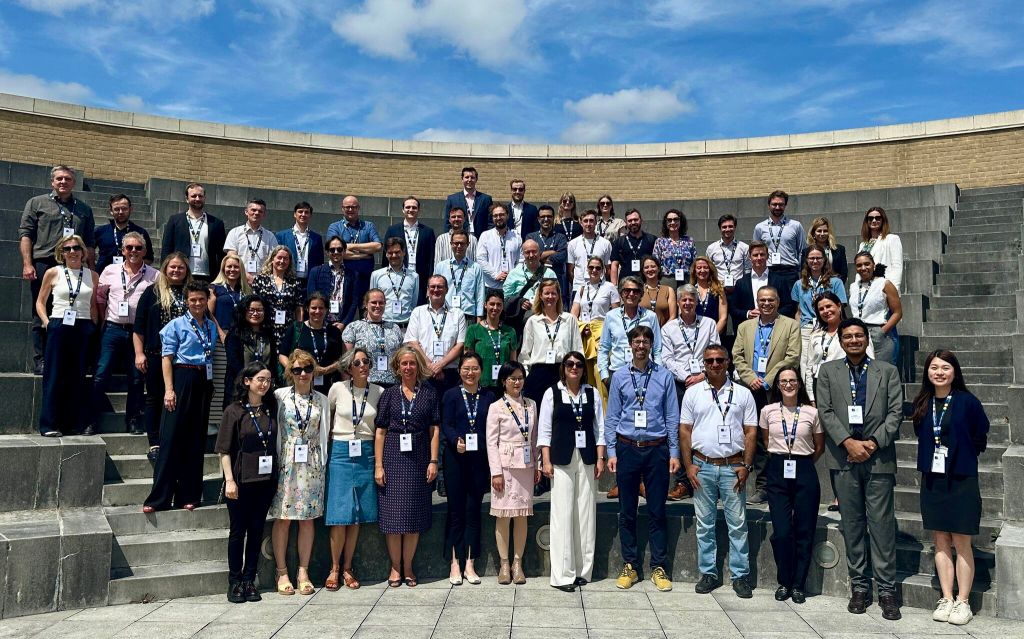
The Austrian Strategizing Activities & Practices Community met at Johannes Kepler Uni Linz

About two years ago, Austrian scholars researching Strategizing Activities and Practices (SAP), which is also a transnational Interest Group at the Academy of Management, had met for a first regional meeting in Innsbruck. Today, we convened for a second time at the Open Innovation Center at Johannes Kepler University (JKU) Linz.

Continue reading “The Austrian Strategizing Activities & Practices Community met at Johannes Kepler Uni Linz”

New Paper: “‘Your Very Existence Goes Against Our Community Guidelines’: Interrogating norms of contributorship through poetic speech acts on Instagram”

Digital platforms, like Instagram, offer various ways for self-expression, support, and community building, but their content moderation practices reveal deep-rooted biases that affect who gets to participate platform organizing. In our recent paper “‘Your Very Existence Goes Against Our Community Guidelines’: Interrogating norms of contributorship through poetic speech acts on Instagram” in Organization Studies, we – Monica Nadegger, Milena Leybold and Sean Kenney – explore how these platforms enforce norms through content moderation, shaping what contributions are deemed appropriate. Find out more in this blog post and in the full paper.

Continue reading “New Paper: “‘Your Very Existence Goes Against Our Community Guidelines’: Interrogating norms of contributorship through poetic speech acts on Instagram””