New Essay in »Digital Responsibility: Building Bridges Between Organization Theory and Information Systems« in SBUR

Cover of SBUR journal

In the wake of a workshop on “Digital Responsibility” at the Annual Meeting of the Association of Professors of Business Administration (VHB) at Leuphana University Lüneburg that brought together scholars and perspectives from organization studies (OS) and information systems (IS), the workshop organizers Hannah Trittin-Ulbrich, Markus Zimmer and Stefanie Habersang edited a curated essay collection to be published in Schmalenbach Journal of Business Research (SBUR).

Together with Elke Schüßler and Maren Gierlich-Joas, I contributed one such essay offering “Interdisciplinary Theoretical Reflections On Digital Responsibility”. It is summarized in the introducation as follows:

Essay 1 situates the first and second fault line in OS and IS scholars ongoing discourses on theory. The authors distinguish three views of theorizing that we can find in both disciplines. They highlight that OT and IS scholars often draw on the same theories, which provides a basis for interdisciplinary research into digital responsibility. Offering a vantage point, they present avenues for such research by their three views of theorizing.

The whole essay collection is available open access over at SBUR.

New Article in Journal of Business Ethics: »Parrying Diversity-Hostility and Ethical Dilemmas of Organizing Inclusion«

various covers of journal of business ethics

It is not a coincidence that organizational efforts to support diversity, equity and inclusion (DEI) are in the eye of the neofascist storm that is currently devastating US-based institutions and has already begun to reverberate globally. The hostility toward DEI results from the fact that such initiatives not only seek to broaden participation, but also unsettle entrenched hierarchies and cultural privileges. This makes them an obvious target for movements aiming to restore exclusionary orders under the guise of tradition, merit, or freedom of speech. Yet, despite their centrality to current political contestations, organizational approaches to DEI remain ill-prepared to address the growing intensity of diversity-hostile communication.

In the article “Parrying Diversity-Hostility and Ethical Dilemmas of Organizing Inclusion” co-authored by my sister Laura Dobusch, Milena Leybold and me, we explore ‘parrying’ diversity hostility as an increasingly necessary DEI practice (in addition to traditional orientations of promoting inclusion and preventing discrimination). The case we are looking at is that of the controversy around the so-called ‘Google Diversity Memo’ by James Damore, which eventually led to the author’s dismissal. Check out the abstract below:

Continue reading “New Article in Journal of Business Ethics: »Parrying Diversity-Hostility and Ethical Dilemmas of Organizing Inclusion«”

New Article in R&D Management: »Anticipating Knowledge Applicability in Open Science Through Recycling, Mimicking, and Shortcutting«

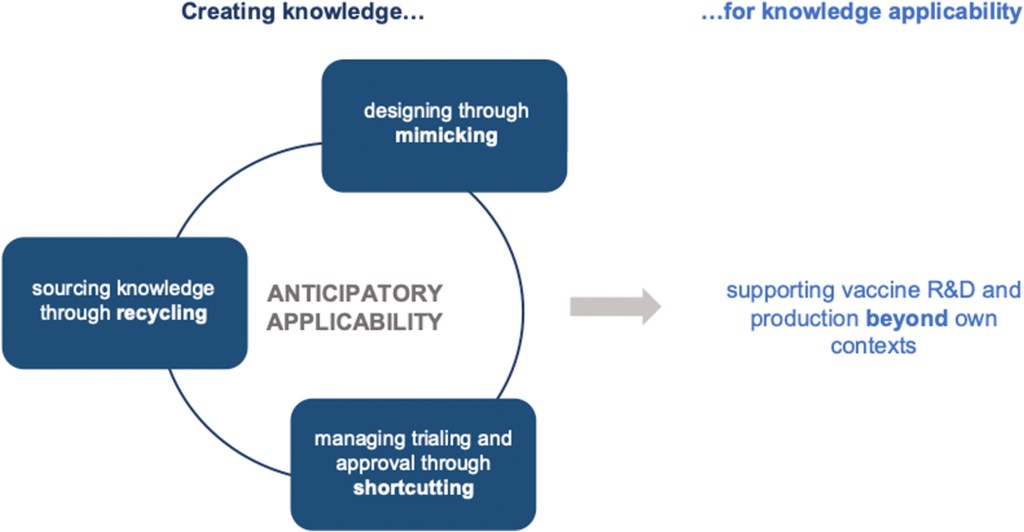
Figure 1: Model of anticipatory applicability throughout the R&D process.
Model of anticipatory applicability throughout the R&D process.

During the Covid-19 pandemic, several ventures tried to develop vaccines that are not protected by patents and could be fast and easily distributed acround the globe. In the course of the research project “Organizing Creativity under Regulatory Uncertainty: Alternative Approaches to Intellectual Property” (funded by the Austrian Science Fund FWF and the German Research Foundation DFG), we collected data on such alternative, more open approaches to pharmaceutical R&D.

It is with great pleasure that a paper comparing five such cases has now been published in the journal R&D Management. Check out the abstract of the article entitled “Anticipating Knowledge Applicability in Open Science Through Recycling, Mimicking, and Shortcutting” and co-authored with my former PhD student Milena Leybold and long-term collaborators Konstantin Hondros and Sigrid Quack below:

Continue reading “New Article in R&D Management: »Anticipating Knowledge Applicability in Open Science Through Recycling, Mimicking, and Shortcutting«”

New Article: »Reviewing is Caring! Revaluing a Critical, but Invisibilized, Underappreciated, and Exploited Academic Practice«

How ChatGPT visually summarized the abstract of the paper on “Reviewing is Caring!”.

Together wie Mie Plotnikof (Aarhus University) and Matthias Wenzel (Leuphana University Lüneburg), I have written an essay proposing a care perspective to the way we organize academic peer review. The paper entitled “Reviewing is Caring! Revaluing a Critical, but Invisibilized, Underappreciated, and Exploited Academic Practice” has now been published open access in Organization. Check out the abstract below:

Continue reading “New Article: »Reviewing is Caring! Revaluing a Critical, but Invisibilized, Underappreciated, and Exploited Academic Practice«”

Neuer Artikel: »Kompetitiv und kooperativ: Zur Neuordnung des Verhältnisses von privaten und öffentlich-rechtlichen Medien im Digitalzeitalter«

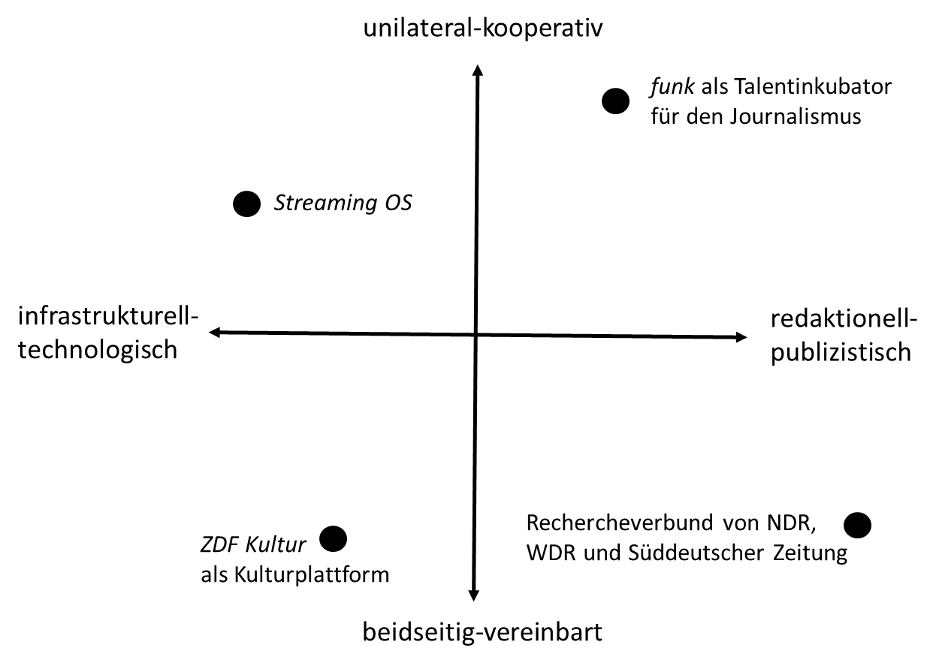
Abbildung: Formen kooperativer Beziehungen zwischen öffentlich-rechtlichen und privaten Medien mit Ankerbeispielen
Formen kooperativer Beziehungen zwischen öffentlich-rechtlichen und privaten Medien mit Ankerbeispielen

Das Verhältnis zwischen privaten und öffentlich-rechtlichen Medien wird in Deutschland traditionell als ein wettbewerbsorientiertes Nebeneinander und gegenseitiges Ausbalancieren wahrgenommen und geregelt. Der digitale Wandel und die zunehmende Dominanz von Plattformen stellen diese Sichtweise jedoch zunehmend in Frage.

Als Antwort darauf plädieren Christopher Buschow (Hamburg Media School) und ich in einem im Wirtschaftsdienst erschienen Beitrag für einen Coopetition-Ansatz, bei dem Wettbewerb und Zusammenarbeit nebeneinander bestehen, um demokratische Öffentlichkeiten zu stärken.

Continue reading “Neuer Artikel: »Kompetitiv und kooperativ: Zur Neuordnung des Verhältnisses von privaten und öffentlich-rechtlichen Medien im Digitalzeitalter«”

New Handbook Chapter: »Open Strategy as a New Form of Strategizing«

Together with Julia Hautz and Thomas Ortner (both situated at the neighboring department of Strategic Management and Leadership), I had the honor to contribute to the most recent iteration of the Cambridge Handbook of Strategy as Practice with a chapter on “Open Strategy as a New Form of Strategizing”:

[W]e can observe an increasing trend towards more inclusive and transparent strategizing. From a practice perspective, this trend can be described as a shift in the practices of strategy-making. [We] describe the different practices of inclusiveness and transparency and show how they relate to each other. [We] then identify and review distinctive themes of strategy as practice research on Open Strategy. This includes the role of technologies and materiality in enabling openness, the discursive practices and processes underpinning openness, the temporal dynamics of open processes, the difference between controlled and uncontrolled forms of openness and the dialectic relationship between openness and closure.

Check out the article here – and please contact me to receive a personal copy in case your institution does not provide access to the handbook.

New Paper: “‘Your Very Existence Goes Against Our Community Guidelines’: Interrogating norms of contributorship through poetic speech acts on Instagram”

Digital platforms, like Instagram, offer various ways for self-expression, support, and community building, but their content moderation practices reveal deep-rooted biases that affect who gets to participate platform organizing. In our recent paper “‘Your Very Existence Goes Against Our Community Guidelines’: Interrogating norms of contributorship through poetic speech acts on Instagram” in Organization Studies, we – Monica Nadegger, Milena Leybold and Sean Kenney – explore how these platforms enforce norms through content moderation, shaping what contributions are deemed appropriate. Find out more in this blog post and in the full paper.

Continue reading “New Paper: “‘Your Very Existence Goes Against Our Community Guidelines’: Interrogating norms of contributorship through poetic speech acts on Instagram””

New Paper: “Dear vulnerability … writing toget-her to escape and resist the neoliberal university”

I – Ellen, Milena, Monica – wrote toget-her, becoming the Collective I. It is not just a paper. It’s love, pain, struggle, courage, connection and togetherness, navigating the challenges of academic writing as early career scholars. It’s an intimate, personal encounter of my vulnerabilities, embraced in and through a collective letter diary. 

And it’s open access, open to all people interested in writing differently toget-her.

You can find it here.

New Book Chapter: »Searching for Transformative Potential: Comparing Conceptualizations of Open, Inclusive and Alternative Organizations«

Together with my sister Laura and Katharina Kreissl, we were given the opportunity to contribute a chapter to “The Handbook of Organizing Economic, Ecological and Societal Transformation”, edited by Elke Weik, Chris Land and Ronald Hartz. In our contribution entitled “Searching for Transformative Potential: Comparing Conceptualizations of Open, Inclusive and Alternative Organizations”, we analyze scholarly approaches that explicitly imagine organizations as capable of ‘doing good’ under the labels of “open”, “inclusive” or “alternative. Check out the abstract below:

Continue reading “New Book Chapter: »Searching for Transformative Potential: Comparing Conceptualizations of Open, Inclusive and Alternative Organizations«”

Neuer juridikum-Aufsatz: »Hört die Signa(le): rechtspolitische Fragen und Ableitungen aus dem Fall der Signa-Gruppe«

Auch wenn ich seit meiner Promotion in meiner Forschung immer wieder rechtswissenschaftliche Themen, vor allem im Bereich des Immaterialgüterreechts, bearbeitet hatte, habe ich kaum in rechtswissenschaftlichen Zeitschriften publiziert. Umso mehr freut es mich, dass kürzlich ein gemeinsam mit Jakob Sturn (Momentum Institut) verfasster, rechtswissenschaftlicher Beitrag in der Zeitschrift juridikum über “rechtspolitische Fragen und Ableitungen aus dem Fall der Signa-Gruppe” erschienen ist.

Continue reading “Neuer juridikum-Aufsatz: »Hört die Signa(le): rechtspolitische Fragen und Ableitungen aus dem Fall der Signa-Gruppe«”