Open Strategy Workshop: From Oxford 2025 to Innsbruck 2026 [Update]

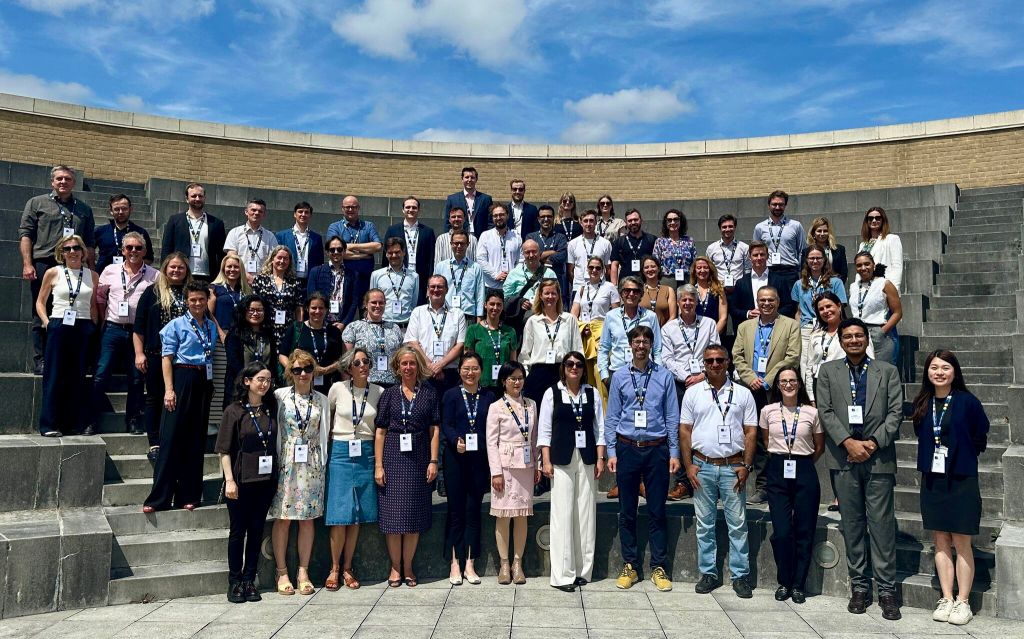
Group photo of participants at Open Strategy Workshop 2025 in Oxford

For two days, scholars from around the world gathered for the 2nd Open Strategy Workshop hosted at Saïd Business School, University of Oxford. The local organizing team, spearheaded by Robin Engelbach and Winky Wu under the guidance of Eero Vaara, Richard Whittington and Violetta Splitter did a fantastic job. Looking back, I am still stunned how much program they managed to fit into just two days.

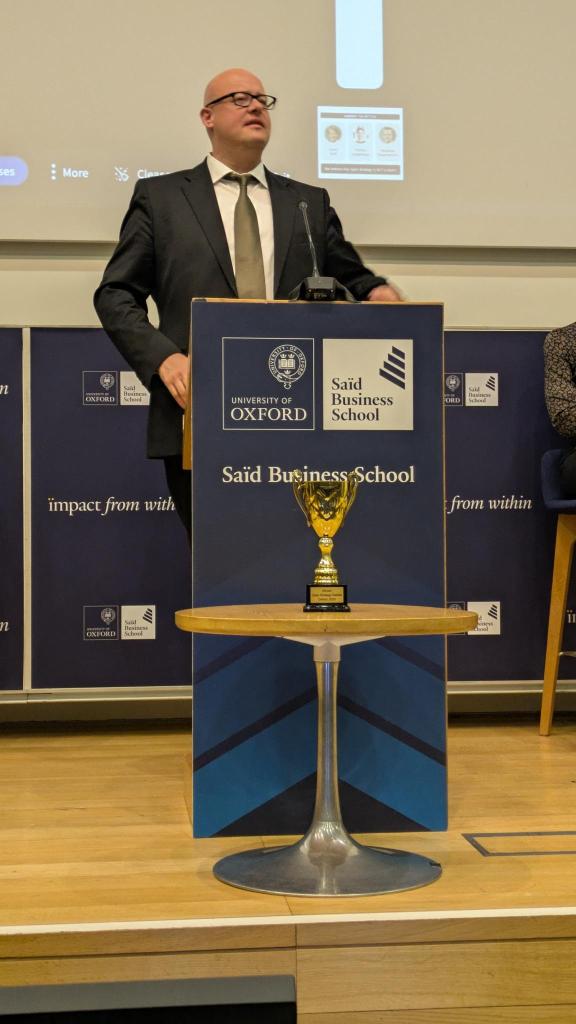
And a workshop full of highlights ended with a bang, when Julia Hautz, Thomas Ortner and I, representing Universität Innsbruck, met Benjamin Grossmann-Hensel, David Seidl and Theresa Langenmayr from UZH Chair of Organization and Management in an Oxford Union Style debate. As for the outcome of this battle, I let the pictures speak for themselves.

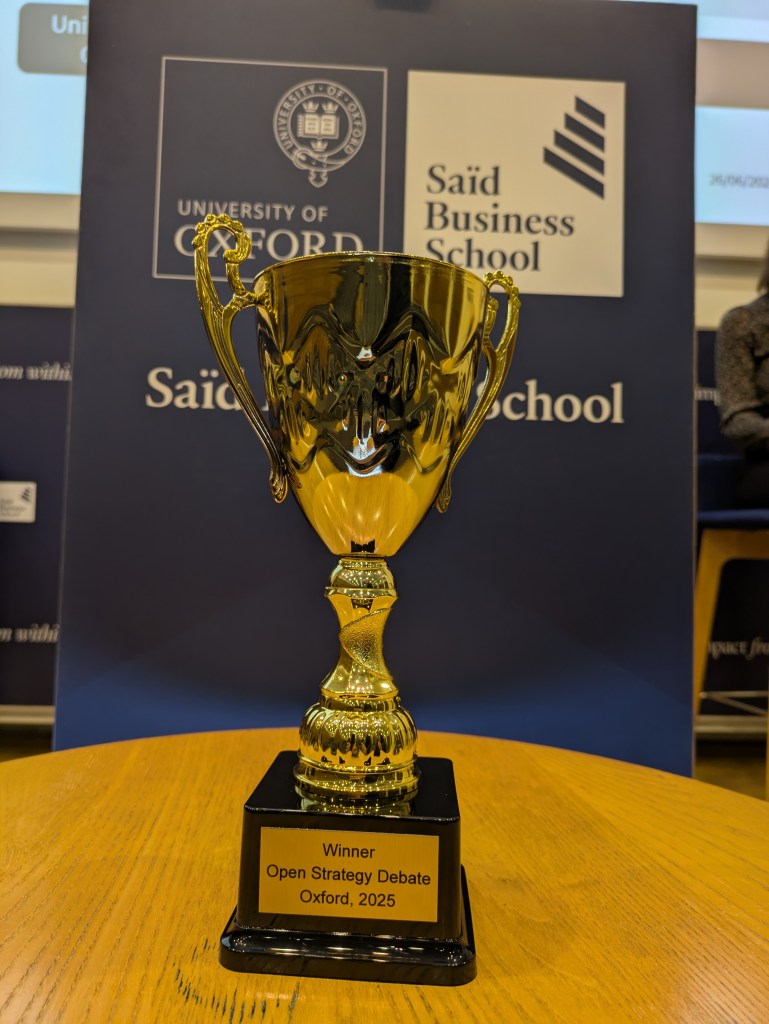
Given that the next iteration of the workshop will be hosted by University of Innsbruck, my colleagues and I were not just impressed, but also a bit intimidated by the standards established this year’s organizing team. A steep hill to climb – but luckily, climbing hills is what Tyroleans are best at.

For those interested in the 3d Open Strategy Workshop, save the date (June 25-26, 2026) and register for the event newsletter to receive updates.

[Update, August 5, 2025] In the meantime, recordings of the Oxford Open Strategy Workshop have been made available at the University of Zurich Mediaspace.

Call for Papers: Special Issue on »Creativity and copyright in the shadow of GenAI«

Picture of the Webpage promoting the call for paper for the special issue on Creativity and copyright in the shadow of GenAI
Call for Papers for a Special Issue in Innovation: Organization & Management

Konstantin Hondros (HSU Hamburg), Astrid Mager (Austrian Academy of Sciences), Patricia Aufderheide (American University Washington), Patrick Cohedent (HEC Montréal) and myself are happy to announce a Call for Paper for a special issue on “Creativity and copyright in the shadow of GenAI: Managing and organizing creative content in the digitalization frenzy” to be published in “Innovation: Organization & Management”. Deadline for submission of full papers is September 30, 2026. Please do not hesitate to contact me or one of the other editors to discuss paper ideas.

In addition, we are planning an online paper development workshop to provide feedback on early-stage submissions on February 27, 2026. We encourage potential authors to submit an abstract of approximately 1,000 words describing their planned contribution, empirical material, and methodological approach (if applicable) by January 25, 2026, to konstantin.hondros@hsu-hh.de. Participation in the workshop is optional, and authors who do not attend are welcome to submit papers to the Special Issue.

Please find the full Call for Papers below:

Continue reading “Call for Papers: Special Issue on »Creativity and copyright in the shadow of GenAI«”

New Article: »Reviewing is Caring! Revaluing a Critical, but Invisibilized, Underappreciated, and Exploited Academic Practice«

How ChatGPT visually summarized the abstract of the paper on “Reviewing is Caring!”.

Together wie Mie Plotnikof (Aarhus University) and Matthias Wenzel (Leuphana University Lüneburg), I have written an essay proposing a care perspective to the way we organize academic peer review. The paper entitled “Reviewing is Caring! Revaluing a Critical, but Invisibilized, Underappreciated, and Exploited Academic Practice” has now been published open access in Organization. Check out the abstract below:

Continue reading “New Article: »Reviewing is Caring! Revaluing a Critical, but Invisibilized, Underappreciated, and Exploited Academic Practice«”

re:publica 2025: Zombies im Rundfunkrecht, rechtskommerzielles Tingeltangel und Governance von offen Digitalinfrastrukturen

Bei der jährlich in Berlin stattfindenden re:publica-Konferenz zur digitalen Gesellschaft werden die Bühnen nicht an Meistbietende verkauft, sondern größtenteils von ehrenamtlichen Track-Teams kuratiert. Umso größer die Ehre, dass ich auch dieses Jahr wieder Teil des Programms sein durfte.

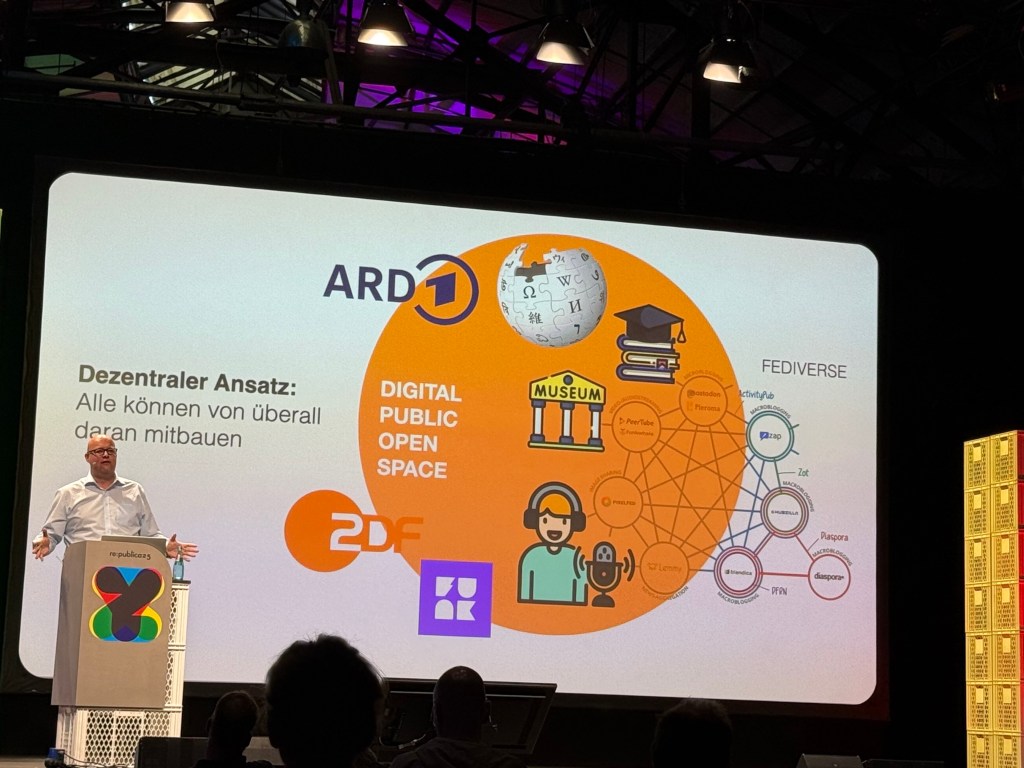
In meinem Vortrag “Von Presseähnlichkeit zu öffentlich-rechtlicher Innovation” (Öffnet in neuem Fenster) habe ich mich vor allem mit immer noch bestehenden gesetzlichen Einschränkungen – Zombie-Regulierungen – für öffentlich-rechtliche Online-Angebote vor allem im Informations- und Nachrichtenbereich auseinandergesetzt. Während private Medienanbieter seit den 1970er Jahren für Einschränkungen öffentlich-rechtlicher Medien zum Schutz ihrer Geschäftsmodelle lobbyieren, lässt sich seither eine enorme Ausdehnung der Sphäre privat-kommerzieller Medien beobachten.

Continue reading “re:publica 2025: Zombies im Rundfunkrecht, rechtskommerzielles Tingeltangel und Governance von offen Digitalinfrastrukturen”